Sure! Here’s a quote from the “Morning Larks vs. Night Owls” section:
“Morning larks tend to wake up early and feel most energetic in the first half of the day. They often go to bed early and may find it challenging to stay awake late into the night. On the other hand, night owls feel more alert and productive in the evening and may struggle with early mornings. This difference in peak alertness times can affect various aspects of life, from work schedules to social activities.”
Would you like to explore more about how these chronotypes impact daily life?

Are You More of a Night or Morning Person?
Have you ever wondered why some people are bright-eyed and bushy-tailed at the crack of dawn, while others hit their stride as the sun sets? Whether you’re a morning lark or a night owl, your preference for early mornings or late nights is more than just a habit—it’s deeply rooted in your biology and lifestyle.
The Science Behind Your Chronotype
Your chronotype, or natural inclination towards being active at certain times of the day, is influenced by a combination of genetic, environmental, and lifestyle factors. Research has shown that our genes play a significant role in determining whether we are morning or evening people. A study involving nearly 700,000 participants identified 351 genetic variants associated with being a morning person¹. These genetic factors influence our internal body clock, which regulates our sleep-wake cycles, hormone release, and even our metabolism.
Morning Larks vs. Night Owls
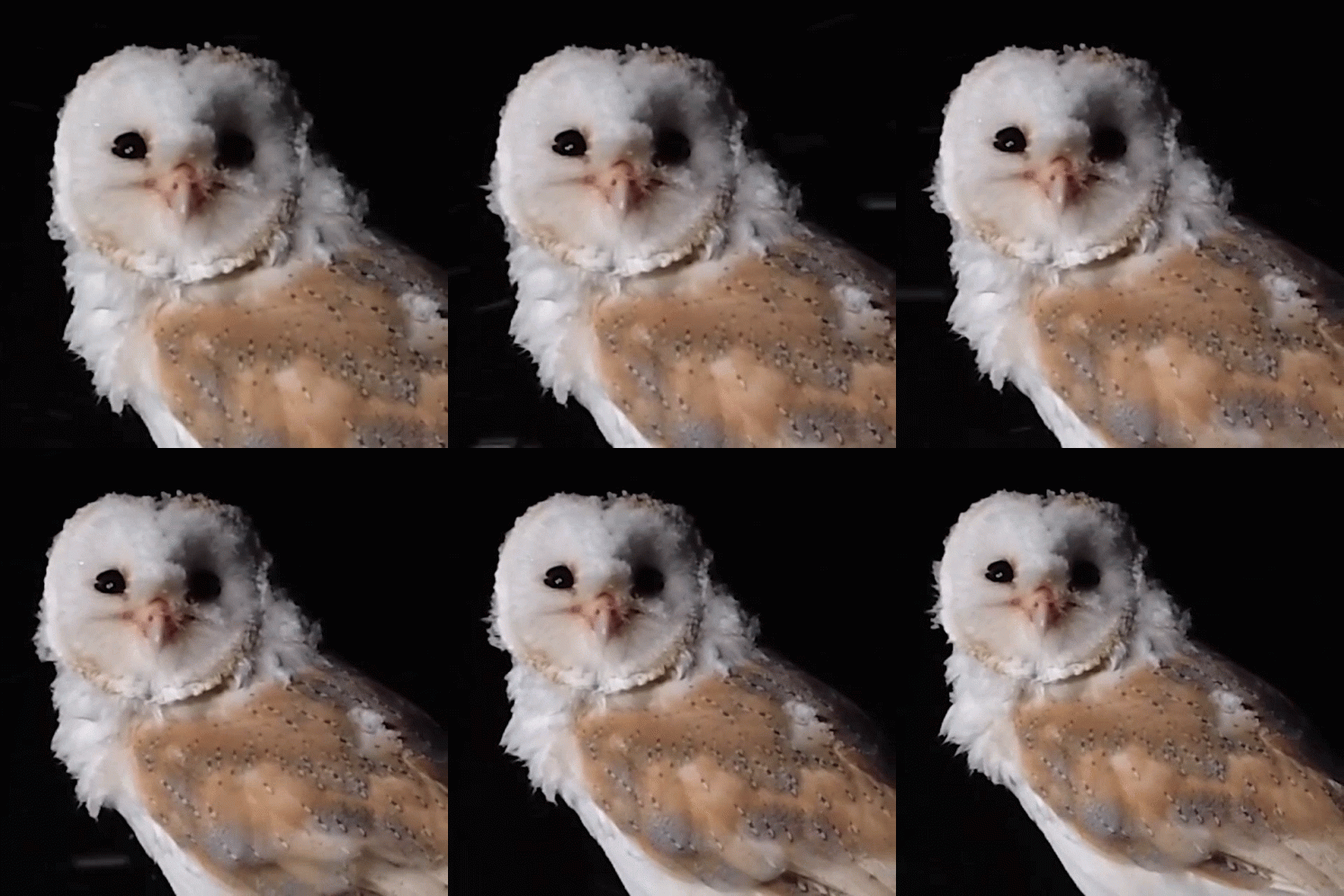
Morning larks tend to wake up early and feel most energetic in the first half of the day. They often go to bed early and may find it challenging to stay awake late into the night. On the other hand, night owls feel more alert and productive in the evening and may struggle with early mornings. This difference in peak alertness times can affect various aspects of life, from work schedules to social activities.
Interestingly, our chronotype can shift throughout our lives. Children are generally more morning-oriented, but as they reach adolescence, they often become more night-oriented. This shift can continue into adulthood, with many people becoming more morning-oriented again as they age².
Health Implications

Your chronotype can also impact your health. Studies have found that night owls may have a higher risk of certain health issues, such as obesity, depression, and type 2 diabetes¹. This could be due to the misalignment between their internal body clock and societal demands, such as early work or school start times. Morning larks, on the other hand, often align better with these schedules, which can contribute to better overall health and well-being.
Finding Your Balance

Regardless of whether you’re a morning person or a night person, it’s important to find a routine that works for you. Here are a few tips to help you make the most of your natural rhythm:
SOURCE :
- Listen to Your Body: Pay attention to when you feel most alert and try to schedule important tasks during these times.
- Create a Consistent Routine: Going to bed and waking up at the same time every day can help
- (1) Morning or night person? It depends on many more genes than we thought …. https://saxena.mgh.harvard.edu/news/morning-or-night-person-it-depends-on-many-more-genes-than-we-thought/.
- (2) Morning People Vs. Night Owls: 9 Insights Backed By Science. https://www.fastcompany.com/3046391/morning-people-vs-night-people-9-insights-backed-by-science.

 kohsarblog
Leave a comment