“Holding a grudge is like drinking poison and expecting the other person to die.” — Often attributed to various sources, including Nelson Mandela and Buddha
This quote hits hard because it reminds us that grudges hurt us more than they hurt the person we’re upset with. It’s a powerful nudge toward forgiveness—not for their sake, but for our own peace.
Are you holding a grudge? About?

Are You Holding a Grudge? Let’s Talk About It (With Heart and Humor)
🌪️ You know that feeling when someone wrongs you—and instead of letting it go, you mentally replay the scene like a Netflix drama on loop? Yeah, that’s a grudge. And if you’re human (which I assume you are), chances are you’ve held one. Maybe you’re holding one right now. No judgment—just curiosity.
Let’s dive into the messy, relatable, and surprisingly enlightening world of grudges. Because understanding them might just be the key to unlocking a lighter, freer version of yourself.
🎭 What Is a Grudge, Really?

A grudge is like emotional luggage you didn’t mean to pack but somehow ended up dragging around. It’s that lingering resentment toward someone who hurt, betrayed, or disappointed you. It’s not just remembering what happened—it’s reliving it, often with a side of bitterness and a sprinkle of passive-aggressive thoughts.
But here’s the kicker: grudges don’t just live in your mind. They sneak into your relationships, your mood, your sleep, and even your health. It’s like giving someone free rent in your head—and they’re not even a good tenant.
🧠 Why Do We Hold Grudges?

Let’s be honest: holding a grudge can feel weirdly satisfying. It gives us a sense of control, a moral high ground, a badge of “I was wronged.” But beneath that lies a cocktail of emotions:
- Hurt: Someone crossed a line, and it stung.
- Disappointment: You expected better—and didn’t get it.
- Fear: Letting go might mean being vulnerable again.
- Ego: Sometimes, we just don’t want to be the “bigger person.”
Grudges are often a defense mechanism. They protect us from future pain by keeping the past front and center. But here’s the twist: they also keep us stuck.
🧨 The Cost of Carrying a Grudge

Imagine walking around with a backpack full of bricks. That’s what a grudge feels like over time. It weighs you down emotionally, mentally, and even physically.
- Stress levels rise: Your body doesn’t know the difference between a real threat and a remembered one.
- Relationships suffer: You might project old wounds onto new people.
- Joy gets muted: It’s hard to fully enjoy life when part of you is stuck in a past chapter.
And let’s not forget the energy drain. Holding a grudge is exhausting. It’s like keeping a fire burning in your heart—one that only scorches you.
🕊️ The Power of Letting Go (No, It’s Not Weakness)

Letting go of a grudge doesn’t mean you’re saying, “It’s okay that you hurt me.” It means you’re saying, “I’m done letting this hurt define me.”
Forgiveness is often misunderstood. It’s not about forgetting or excusing—it’s about releasing. It’s choosing peace over poison. And it’s one of the most powerful things you can do for yourself.
Here’s what happens when you let go:
- You reclaim your energy.
- You open space for new, healthier connections.
- You stop being tethered to someone else’s actions.
It’s not easy. But it’s worth it.
💡 How to Know If You’re Holding a Grudge
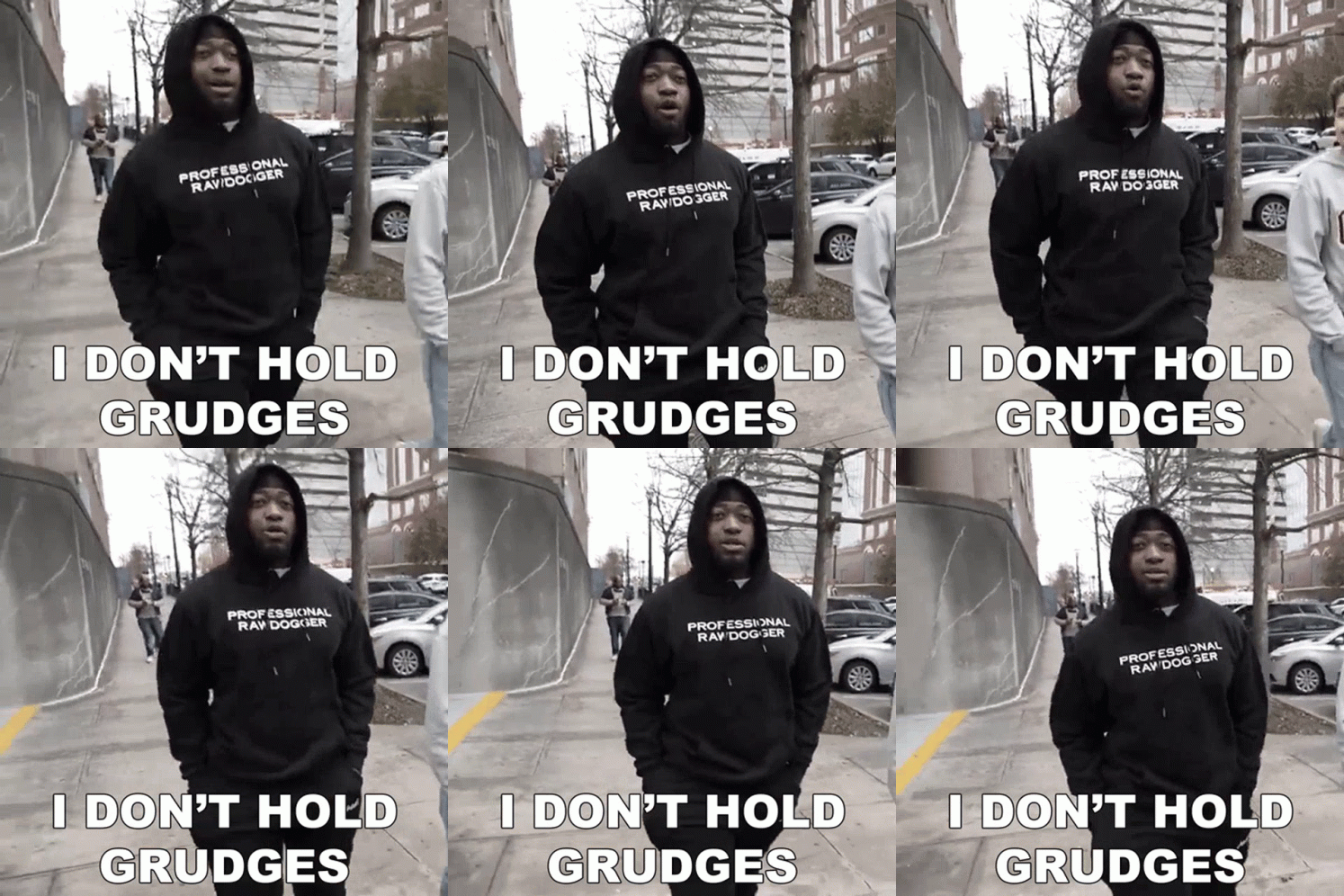
Still not sure if you’re holding one? Here are a few signs:
- You replay the incident often, especially when you’re upset.
- You feel a surge of anger or bitterness when you hear their name.
- You secretly hope they fail—or feel smug when they do.
- You avoid them, but not because of boundaries—because of unresolved resentment.
- You talk about what happened more than you’d like to admit.
If any of these hit home, don’t panic. You’re not broken. You’re just human. And awareness is the first step toward healing.
🛠️ Tools for Letting Go (Without Losing Yourself)

Letting go of a grudge isn’t a one-size-fits-all process. But here are some tried-and-true strategies that can help:
- Write It Out
Journaling helps you process emotions without judgment. Write a letter to the person (you don’t have to send it). Say everything you wish you could say. Then, burn it, shred it, or keep it—whatever feels right. - Talk It Through
Sometimes, a heart-to-heart can clear the air. Other times, talking to a therapist or trusted friend can help you gain perspective. - Practice Empathy
This one’s tough, but powerful. Try to understand why they did what they did. It doesn’t excuse it—but it might explain it. - Set Boundaries
Forgiveness doesn’t mean access. You can let go and still protect your peace. - Choose Peace Daily
Letting go is a practice, not a one-time event. Some days you’ll feel free. Other days, the grudge will sneak back in. That’s okay. Just keep choosing peace.
🌈 The Unexpected Joy of Release

Here’s the beautiful part: when you let go of a grudge, you make room for joy. For laughter. For deeper connections. For a version of yourself that isn’t weighed down by old wounds.
You become lighter. Freer. More present.
And you realize that forgiveness isn’t just a gift to others—it’s a gift to yourself.
💬 Final Thoughts: Are You Holding a Grudge?

If you are, be gentle with yourself. You’re not weak. You’re not petty. You’re just navigating the messy terrain of being human.
But also know this: you don’t have to carry it forever. You can choose to release it. To heal. To grow.
So maybe today’s the day you ask yourself: What would my life look like without this grudge?
And maybe—just maybe—you’ll decide to find out.

 kohsarblog
Leave a comment