“The city of the future isn’t a grid of cold, efficient steel and glass; it’s a living, breathing ecosystem designed not for traffic, but for people. It’s a tapestry woven with threads of green canopies, human connection, and joyful simplicity—where every street corner invites a conversation, every commute is a breath of fresh air, and the heartbeat of the city isn’t its economy, but its community.”
Building the City of Tomorrow: A Place Not Just for Living, But for Thriving
Close your eyes for a second. Think about your city. What do you hear? The relentless hum of traffic? The distant wail of a siren? What do you feel? The grit of exhaust on your skin, the slight anxiety of navigating a crowded sidewalk, the concrete radiating heat back at you?
Now, wipe that slate clean. Let’s dream together. Let’s design the city of the future—not the dystopian, steel-and-glass jungles of sci-fi nightmares, but a vibrant, breathing, living organism designed not for efficiency, but for us. For people. For community. For joy.
This isn’t just about flying cars and holographic billboards. It’s about something far more radical: creating a city that feels like a hug, that fuels our souls, and that lives in harmony with the planet. So, where do we even begin?
The Green Pulse: Nature is Not an Amenity, It’s the Foundation
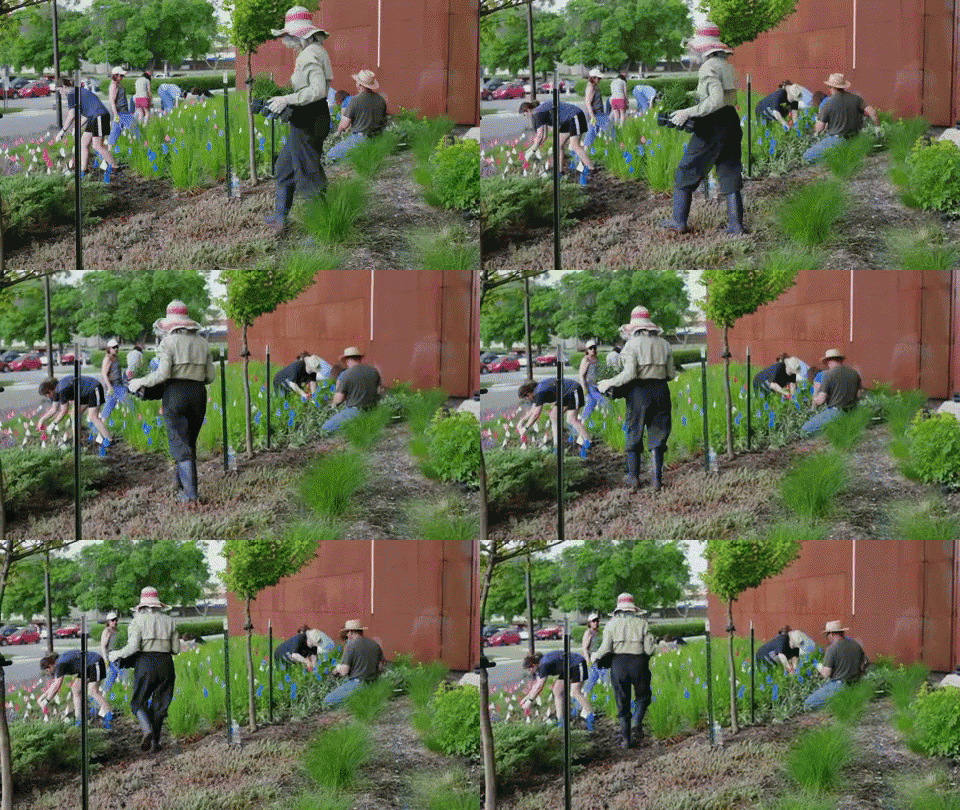
Imagine stepping out your front door not onto a slab of concrete, but onto a path woven through a community garden. Your commute to work is a stroll through a canopy park, not a battle in a traffic jam. The city of the future is green, not grey.
This means more than just a few token parks. We’re talking about vertical forests on skyscrapers that clean the air, productive green roofs that grow food and absorb rainwater, and rewilded waterways where children can skip stones and watch for fish. Nature would be seamlessly integrated into the very fabric of the city, reducing the urban heat island effect, improving our mental health, and creating habitats for biodiversity. The air is crisp. The soundtrack is birdsong, not honking. This is non-negotiable.
The 15-Minute City: Reclaiming the Most Precious Resource—Time

The future city is designed for proximity, not proximity to a highway. The revolutionary (and beautifully simple) idea of the “15-minute city” is our blueprint. In this city, everything you need—your job, fresh groceries, your doctor, your child’s school, your favorite café—is within a 15-minute walk or bike ride from your home.
Just let that sink in. No more two-hour daily commutes. No more “quick errands” that吞噬 your entire afternoon. This single design principle gives us back our time—time for hobbies, for family, for rest, for simply being. Streets would transform from congested thoroughfares for cars into vibrant public spaces for people. The constant, low-grade stress of commuting would evaporate, replaced by the gentle rhythm of walking and the invigorating freedom of cycling.
The Joy of Movement: Streets Built for People, Not Metal Boxes
Speaking of cycling, the city of the future is a pedestrian’s paradise. Wide, shaded sidewalks are bustling with life. Safe, extensive, and protected bike lanes are the main arteries, filled with people of all ages pedaling to work, to meet friends, or just for the sheer joy of it.
Of course, we’ll still need transportation. But it will be smart, shared, and sustainable. Imagine a seamless network of autonomous electric shuttles, on-demand and integrated with incredible public transit. High-speed trams and trains connect the 15-minute neighborhoods, making cross-city travel a breeze. Personal car ownership? Largely a thing of the past. The vast parking lots that blight our current cities can be transformed into housing, parks, and playgrounds. The roar of engines is replaced by the murmur of conversation and the whir of bicycle wheels.
Smart Heart, Human Soul: Technology that Serves, Not Surveils

When we say “smart city,” forget the cold, dystopian trope. The technology in our future city is invisible, intuitive, and humane. It’s not about facial recognition cameras on every corner; it’s about sensors that monitor air quality and automatically adjust traffic flow to reduce pollution. It’s about apps that help you find a parking spot for that rare time you need a car-share, or that tell you the exact wait time for the next bus.
It’s a digital nervous system that makes the city run smoother, healthier, and more efficiently, freeing us up to focus on what truly matters: human connection. The data collected is used to improve our lives, not to track them. The city learns and adapts to our needs, like a thoughtful host anticipating the needs of its guests.
The Community Fabric: Designing for Serendipity and Connection
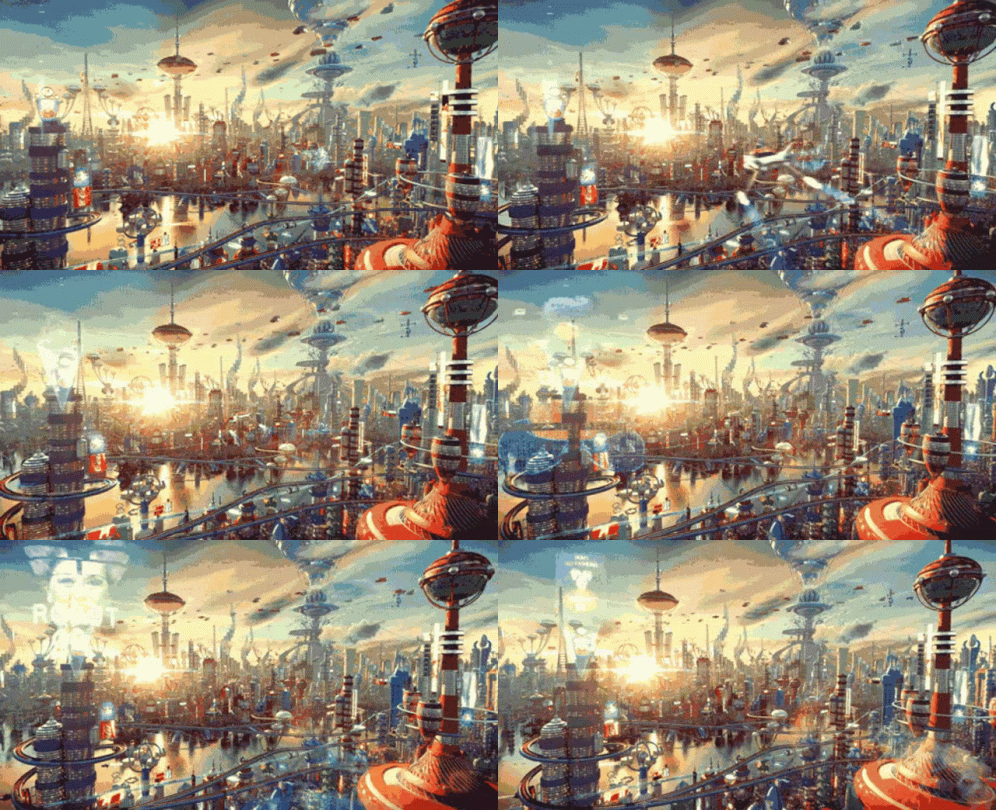
A city is nothing without its people. Our future city is designed to foster chance encounters and build community. This means mixed-use neighborhoods where shops, restaurants, offices, and homes coexist. It means abundant, quirky public spaces—plazas with movable chairs, pop-up markets, outdoor libraries, community workshops, and performance spaces where anyone can put on a show.
Architecture would prioritize human scale, with inviting ground floors that engage the street, not blank, impersonal walls. It’s about creating countless opportunities for us to bump into our neighbors, share a smile, and build the kind of social bonds that make a place feel like home. This is the antidote to the loneliness that plagues so many modern cities.
A Circle, Not a Line: Embracing a Circular Economy
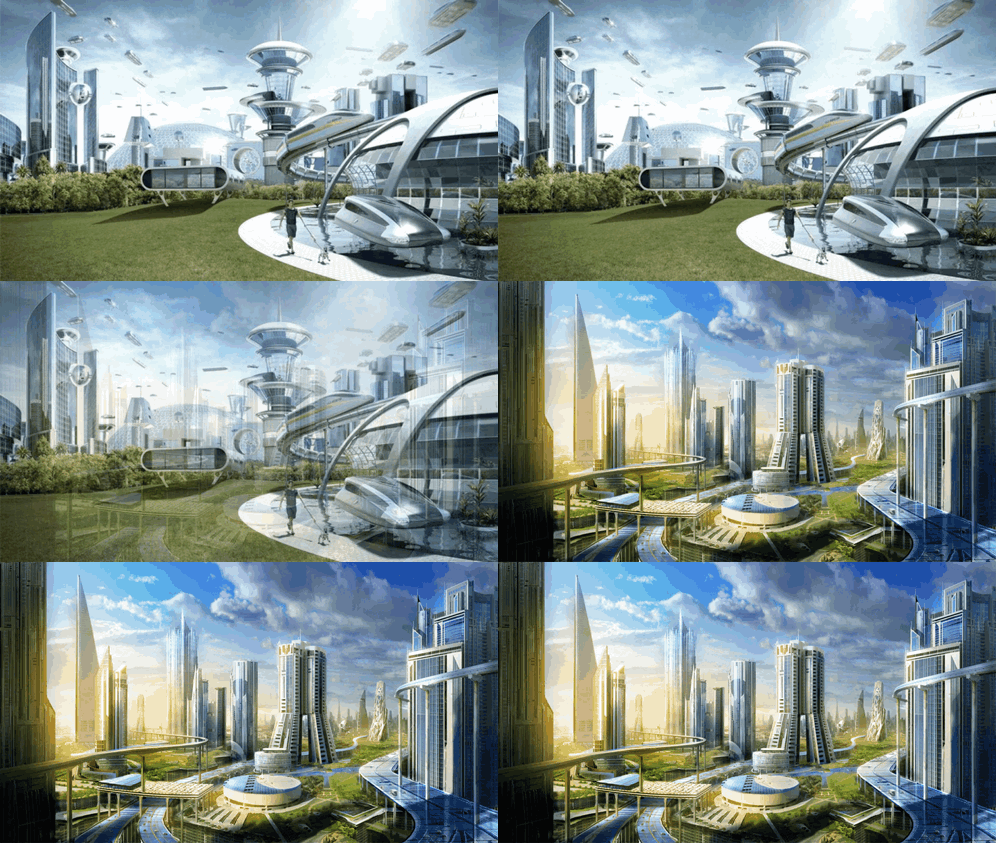
Finally, the city of the future is a regenerative, circular ecosystem. Nothing is wasted. Buildings are constructed from sustainable, even recycled materials, and are designed to be energy producers (through solar, wind, and geothermal), not just consumers.
Organic waste becomes compost for those vertical farms. Water is harvested, cleaned, and reused. The linear “take-make-dispose” model is replaced by a circular one where everything has value. We become stewards of our environment, living within our planet’s means and ensuring this beautiful city can thrive for generations to come.
The Blueprint is Human
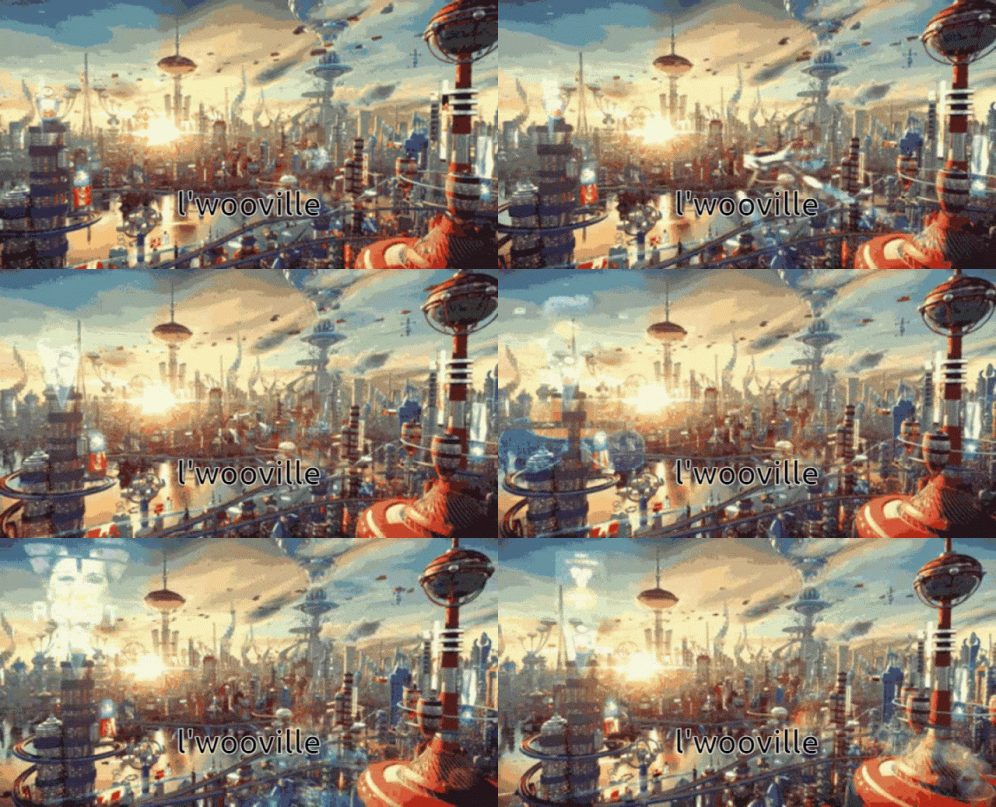
Designing the city of the future isn’t just an architectural challenge; it’s a philosophical one. It asks us: what kind of life do we want to live? The answer is clear: we want lives filled with connection, well-being, time, and joy.
The technology, the design, the infrastructure—it’s all in service to that goal. It’s about building a background so beautiful and functional that the foreground—our lives—can truly flourish.
The best part? We don’t have to wait for the future to start building this. We can advocate for bike lanes today. We can support local businesses. We can plant community gardens. We can imagine better.
So let’s dream, and then let’s build. Together. The city of the future is waiting—and it looks a lot like us, happy, connected, and home at last.

 kohsarblog
Leave a comment