“One bite of my grandmother’s cinnamon-dusted apple pie doesn’t just taste like childhood—it is childhood. The buttery crust crumbles, the tart-sweet filling warms my tongue, and suddenly I’m eight years old again: feet dangling from her kitchen stool, watching flour drift like snow through afternoon sunbeams, breathing in the alchemy of sugar and love. Some foods aren’t mere recipes—they’re time machines crafted by memory’s hands, transporting us back to the moments that shaped us with heartbreaking tenderness.”
— Inspired by shared stories of taste and memory
Why this resonates:
Sensory Anchors
Mentions texture (crumbling crust), temperature (warm filling), scent (cinnamon, flour), tying memory to physical experience.
Emotional Time Travel
Captures the sudden, involuntary plunge into the past (“suddenly I’m eight years old”).
Universal Yet Personal
Uses a common comfort food (apple pie) but paints an intimate scene (grandmother’s kitchen, dangling feet).
Metaphor with Meaning
Calls food a “time machine crafted by memory’s hands” — honoring both science and sentiment.
Fun fact:
Research confirms this phenomenon. The brain’s olfactory bulb (smell) and gustatory cortex (taste) link directly to the hippocampus (memory) and amygdala (emotion). Childhood foods imprint deeply because these neural pathways form when our senses are most intense (Journal of Sensory Studies, 2018).
What’s your time-machine food? 🍎🥧
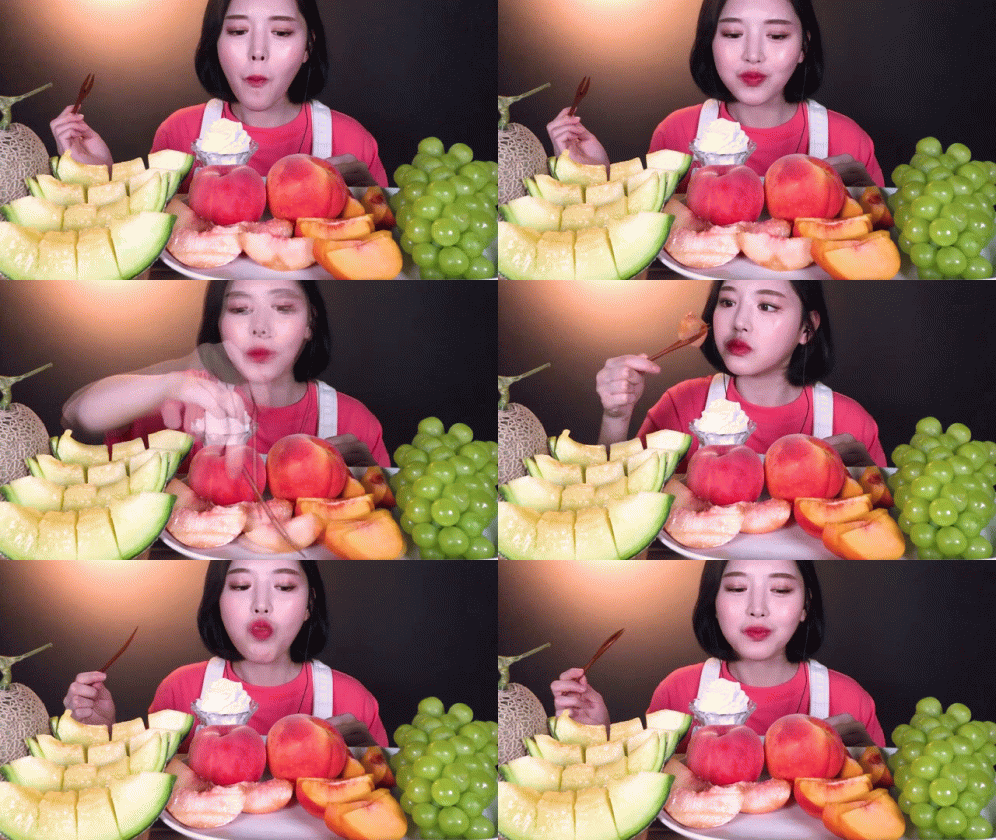
The Taste of Time Travel: How Certain Foods Whisk Us Back to Childhood
Have you ever taken a bite of something ordinary and been suddenly flooded with vivid childhood memories? That unexpected journey through time isn’t just poetic imagination—it’s neuroscience in action. The phenomenon, known as the “Proust effect,” refers to French novelist Marcel Proust’s description of how tasting a madeleine cake dipped in tea unleashed a torrent of childhood recollections in his novel In Search of Lost Time . Decades later, science confirms what Proust instinctively knew: certain foods serve as delicious time machines, carrying us back to our earliest years with startling clarity.
The Science Behind the Sensory Time Capsule

Why does this happen? The answer lies deep within our brains. When we eat, our brain processes not only the taste and smell of food but also the context and emotions associated with the experience . The olfactory system (responsible for smell) has a direct pathway to the limbic system—the brain’s emotional control center where memories form. As psychology professor Susan Krauss Whitbourne explains: “Food memories involve very basic, nonverbal areas of the brain that can bypass your conscious awareness… You can’t put those memories into words, but you know there’s ‘something’ that the food triggers deep within your past” .
This connection forms powerfully during childhood when our senses are heightened and experiences are novel. The hippocampus—the brain’s memory hub—forges strong links between flavors, emotions, and context. Sweet foods particularly amplify this effect, activating dopamine pathways that strengthen memory formation . When we encounter these tastes years later, they unlock entire sensory landscapes: the warmth of a kitchen, a caregiver’s voice, or the safety of home.
Personal Portals to the Past

Across cultures and cuisines, people carry these edible memory triggers:
- Handvo: For writer Shubha Apte, this savory Gujarati lentil cake instantly transports her to her mother’s kitchen in Kutch, India. The aroma alone evokes “lazy weekends where my mother’s culinary prowess transformed ordinary ingredients into moments of pure joy” .
- Chicken Burgers and Congee: For one blogger, fast-food chicken burgers recall family road trips in the Philippines, while simple rice porridge conjures rainy afternoons and parental care during childhood illnesses .
- Polpettine di Pollo: Food writer Giulia Scarpaleggia’s mother steamed these delicate Italian chicken-and-potato meatballs for her picky younger sister. Today, Giulia prepares them for her daughter, hoping to create “her mamma’s polpettine” memories .
- Bit-O-Honey Candy: Anthropologist John Allen describes how this forgotten treat instantly returned him to childhood road trips: “I was transported back to the back seat of my parents’ car, looking out at endless rows of corn stalks” .
Table: How Foods Trigger Multisensory Childhood MemoriesFoodMemory TriggeredSensory Pathways Handvo Weekend family lunches in Gujarat Aroma, taste, texture of lentils Chicken Burger Filipino road trips Crispy texture, savory flavor Congee Parental care during illness Warmth, soft texture Bit-O-Honey Long car rides through farmland Sticky texture, honey-nut flavor
Why Childhood Foods Anchor Us
These edible memories share powerful commonalities:
- Emotional Security: Comfort foods often connect to moments when we felt protected. As one writer notes, they provide “moral and spiritual sustenance” beyond mere nutrition . Congee’s warmth represents parental love; a grandmother’s cake embodies her affection.
- Cultural Continuity: Traditional dishes act as edible heirlooms. French regional specialties like Alsatian choucroute or Provençal aioli preserve family roots and identity . Passing down recipes—whether Handvo or Italian bracioline—becomes an act of preserving heritage.
- Ritual and Repetition: Foods associated with routines—Sunday pancakes, after-school snacks, holiday feasts—create neural pathways through repetition. The Japanese intentionally use family meals to build happy associations that become lifelong emotional anchors .
The Bittersweet Power of Food Nostalgia
Not all food memories are joyful. Swedish researchers found adults’ relationships with food often mirror childhood patterns: those with positive associations use cooking as a “secure emotional base,” while others may struggle with disordered eating if meals were stressful . A single negative experience—like being force-fed a disliked dish—can create lifelong aversions .
Yet overwhelmingly, these taste memories connect us to people and places we cherish. As one writer describes her grandmother’s farm: “I can almost taste Perima’s sambar as I think about it now… It was always less spicy than my mom’s” . The specificity of these recollections—the stickiness of Bit-O-Honey’s wrapper, the oil floating on a friend’s vathakozhambu lunch—proves their emotional potency .
Creating and Carrying Forward Edible Legacies

The true magic of these foods lies in their ability to transcend time. When Shubha Apte recreates her mother’s Handvo for her son, she bridges generations . When Giulia Scarpaleggia steams polpettine for her daughter, she invests in future nostalgia . This is why sharing family recipes matters profoundly—they’re not just instructions, but vessels for stories, love, and identity.
Try This: Next time a taste transports you, don’t just savor the flavor—write down:
- The specific memory it evokes
- Who was with you
- How your body felt then
- The emotion it conjures now
You’ll have preserved more than a recipe; you’ll have captured a portal to your personal history.
The Last Bite
In our fragmented modern world, these edible memories offer something precious: continuity. They remind us that beneath busy adult lives, the child we once were still exists—delighted by a candy bar, comforted by porridge, connected to those who first nourished us. As one writer beautifully observes: “Within those pages [of recipe books] lie keys to unlocking a treasure trove of memories, each dish serving as a portal to our childhood selves” .
What food instantly returns you to childhood? Share your taste-triggered memory in the comments.

 kohsarblog
Leave a comment