“Antarctica is not just a place; it’s a state testament to nature’s power and indifference.” — Anonymous
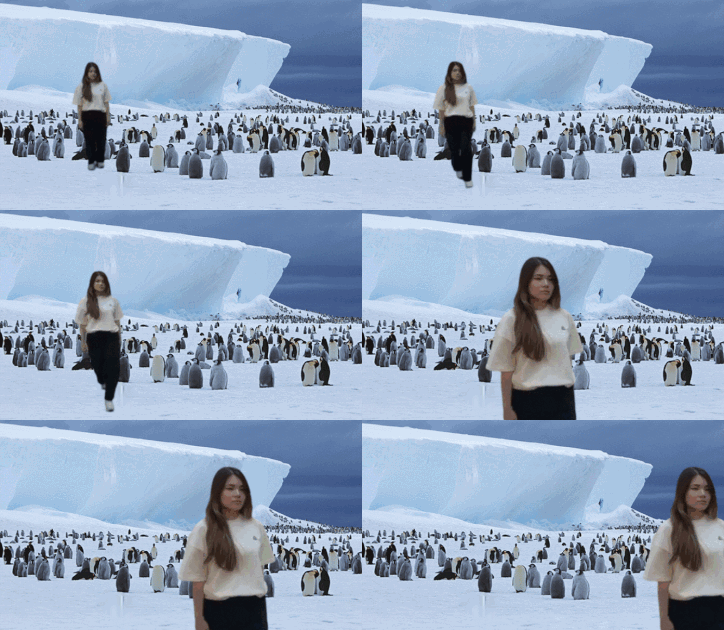
A Place I Never Want to Visit: Antarctica and Its Unforgiving Wilderness
When asked about places one might never want to visit, the mind often drifts to war-torn regions, polluted urban sprawls, or areas plagued by extreme poverty or political instability. Yet, for me, the answer is not a place shaped by human conflict or neglect but one sculpted by nature’s most unrelenting forces: Antarctica. The frozen continent, a land of stark beauty and extreme isolation, is a destination I have no desire to explore. This choice might seem surprising—Antarctica is often romanticized as a pristine, otherworldly wilderness, a bucket-list destination for adventurers and scientists. But its harsh climate, profound isolation, and environmental fragility make it a place I’d rather admire from afar. In this blog post, I’ll delve into why Antarctica holds no allure for me, exploring its environmental challenges, physical and psychological demands, and the ethical concerns surrounding tourism in such a delicate ecosystem.
The Harsh Reality of Antarctica’s Climate

Antarctica is the coldest, windiest, and driest continent on Earth. Its climate is not just inhospitable—it’s actively hostile to human life. Temperatures can plummet to below -60°C (-76°F) in winter, and even in the relatively “mild” summer months, they rarely rise above freezing. The wind, often exceeding 100 miles per hour, transforms the cold into a piercing force that can cause frostbite in minutes. Blizzards can erupt without warning, reducing visibility to near zero and trapping travelers in a whiteout.
For someone like me, who values comfort and warmth, the idea of enduring such conditions is deeply unappealing. I’m not an adrenaline junkie who thrives on pushing physical limits, nor do I find joy in battling the elements. The thought of layering up in bulky gear, constantly monitoring for signs of hypothermia, or struggling to perform basic tasks in subzero temperatures sounds more like punishment than adventure. Even the most well-prepared expeditions face risks—equipment can fail, and rescue operations in Antarctica are slow and complicated due to its remoteness. The continent’s climate demands a level of resilience and preparedness that I simply don’t possess, nor do I wish to cultivate for the sake of a visit.
Beyond the physical discomfort, Antarctica’s climate poses logistical challenges that make travel there feel more like a military operation than a vacation. Most visitors arrive via cruise ships from South America, enduring the treacherous Drake Passage, known for some of the roughest seas in the world. The crossing can take days, with passengers battling seasickness and unpredictable storms. Once on land, activities are tightly controlled due to weather conditions, and even a short excursion requires meticulous planning. For someone who prefers spontaneous, carefree travel, this level of regimentation is a deterrent.
The Psychological Toll of Isolation
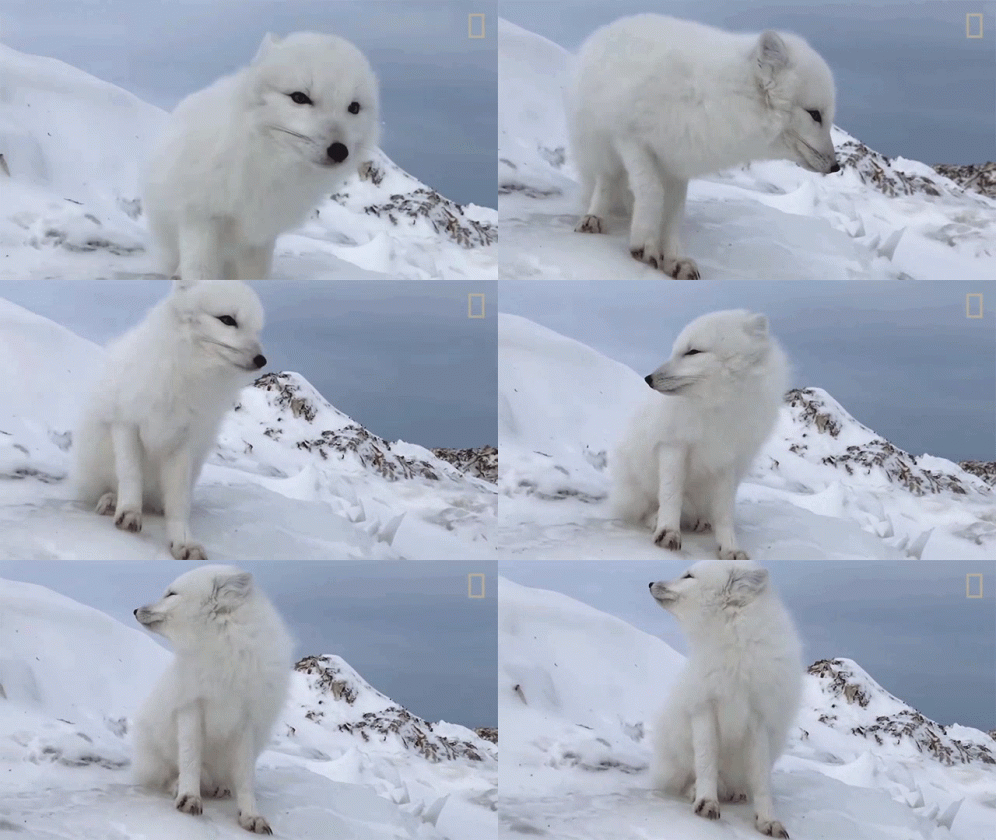
Antarctica’s isolation is another reason it holds no appeal. The continent is the most remote place on Earth, with no permanent human population and only a handful of research stations occupied by scientists and support staff. For tourists, visits are typically brief, lasting a week or two, but even that short time can feel isolating. There are no cities, no villages, no cultural landmarks—just ice, rock, and the occasional penguin or seal. The vast emptiness, while awe-inspiring to some, strikes me as oppressive.
Humans are social creatures, and I find joy in places where I can connect with others, whether through shared meals, conversations, or cultural experiences. Antarctica offers none of these. The silence of the continent, broken only by the howl of the wind or the creaking of ice, might be meditative for some, but for me, it evokes a sense of loneliness. Studies on overwintering scientists at Antarctic research stations highlight the psychological strain of isolation, with many reporting symptoms of depression, anxiety, and irritability. While tourists don’t stay long enough to experience these extremes, the absence of human connection and the stark, unchanging landscape could still take a toll.
Moreover, Antarctica’s isolation amplifies the sense of vulnerability. If something goes wrong—a medical emergency, a shipwreck, or a sudden storm—help is far away. The nearest hospitals are thousands of miles away in South America or Australia, and evacuation is often impossible during bad weather. This precariousness adds a layer of stress that I’d rather avoid. I prefer destinations where I feel secure, where the infrastructure supports easy access to assistance if needed. Antarctica, by contrast, feels like a place where you’re entirely at the mercy of nature.
Environmental and Ethical Concerns
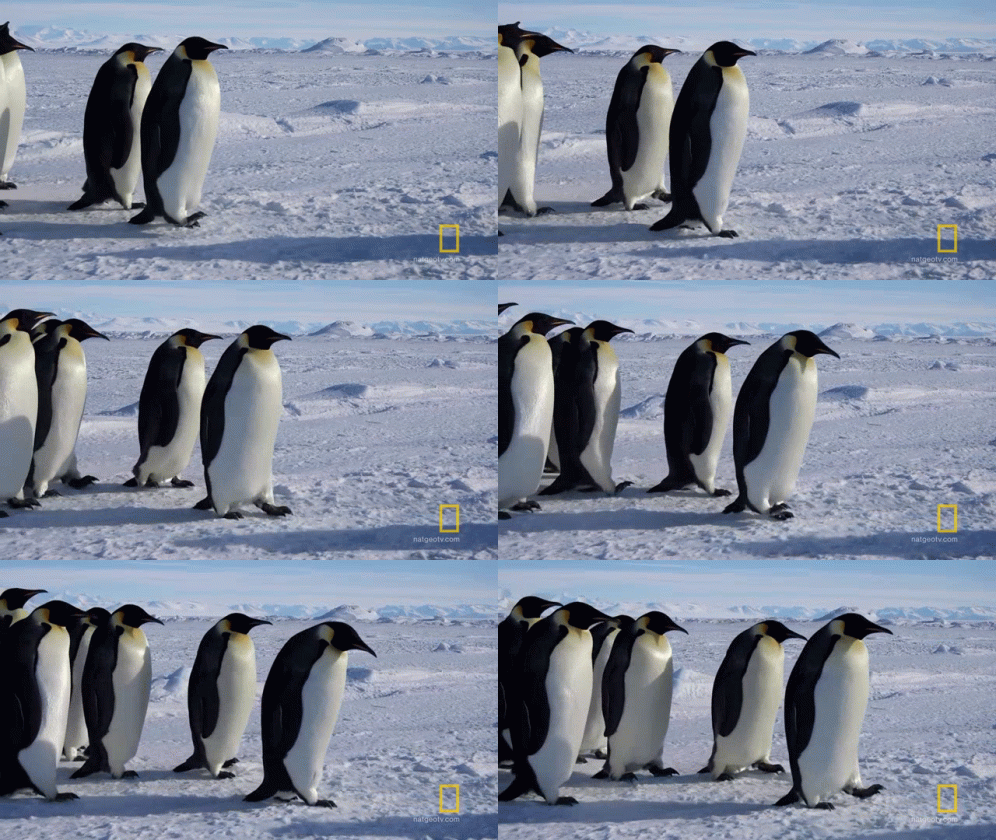
Perhaps the most compelling reason I don’t want to visit Antarctica is the environmental impact of tourism. The continent is one of the last truly pristine ecosystems on Earth, home to unique wildlife like penguins, seals, and whales, and a critical component of the global climate system. Its ice sheets regulate sea levels, and its waters support a delicate food web. Yet, tourism, even when tightly regulated, poses risks to this fragile environment.
The International Association of Antarctica Tour Operators (IAATO) sets strict guidelines to minimize impact, such as limiting the number of visitors on land at any one time and enforcing biosecurity measures to prevent the introduction of non-native species. However, the growing popularity of Antarctic tourism—over 100,000 visitors annually in recent years—strains these efforts. Cruise ships, which burn massive amounts of fuel, contribute to greenhouse gas emissions, ironically accelerating the climate change that threatens Antarctica’s ice. Accidental oil spills, while rare, could be catastrophic for marine life. Even small actions, like a tourist stepping on fragile moss or disturbing a penguin colony, can have outsized consequences in such a sensitive ecosystem.
As someone who cares about environmental conservation, I find it hard to justify visiting a place where my presence, however careful, could contribute to harm. The carbon footprint of traveling to Antarctica is enormous, especially for those flying from distant countries to reach departure ports in Argentina or Chile. I’d rather reduce my impact by exploring closer, less vulnerable destinations. There’s also the question of whether tourism in Antarctica is ethical at all. Some argue that it fosters appreciation for the continent’s beauty and fragility, encouraging conservation efforts. But I wonder if the same appreciation could be gained through documentaries, virtual tours, or supporting scientific research from afar, without adding to the environmental toll.
The Lack of Cultural Appeal
Another factor that keeps Antarctica off my travel list is its lack of cultural or historical depth. I’m drawn to places with rich human stories—ancient ruins, vibrant markets, museums, or festivals that reveal how people have lived and thrived. Antarctica, by contrast, has no indigenous population, no ancient civilizations, and no cultural traditions. Its human history is limited to the exploits of explorers like Roald Amundsen and Ernest Shackleton, whose tales of survival are fascinating but not enough to entice me to visit.
The continent’s primary draw is its natural beauty—glaciers, icebergs, and wildlife. While I can appreciate stunning landscapes, I find them less compelling without a human context. A mountain in Peru, framed by Incan terraces, or a desert in Morocco, dotted with Berber villages, holds more allure for me than Antarctica’s barren vistas. The animals of Antarctica are undoubtedly charismatic, but I’d rather observe penguins in a zoo or watch whales off the coast of Canada, where the experience is more accessible and less invasive.
The Financial and Practical Barriers

Finally, the practicalities of visiting Antarctica are a significant deterrent. Travel to the continent is prohibitively expensive, with cruises starting at $10,000 per person and often climbing much higher for luxury or specialized expeditions. As someone who values budget-conscious travel, this price tag is hard to swallow, especially when the experience feels so limited. A week in Antarctica offers little diversity—most days involve similar activities, like zodiac cruises or brief landings, with no opportunity to immerse oneself in a new culture or cuisine.
The time commitment is also daunting. Reaching Antarctica requires multiple flights, often from North America or Europe to South America, followed by a multi-day sea voyage. For someone with a busy schedule, the investment of time and money feels disproportionate to the payoff. I’d rather spend those resources on a longer, more varied trip to a place like Southeast Asia or South America, where I can explore multiple countries, cuisines, and cultures in a single journey.
Why Not Antarctica? A Personal Perspective
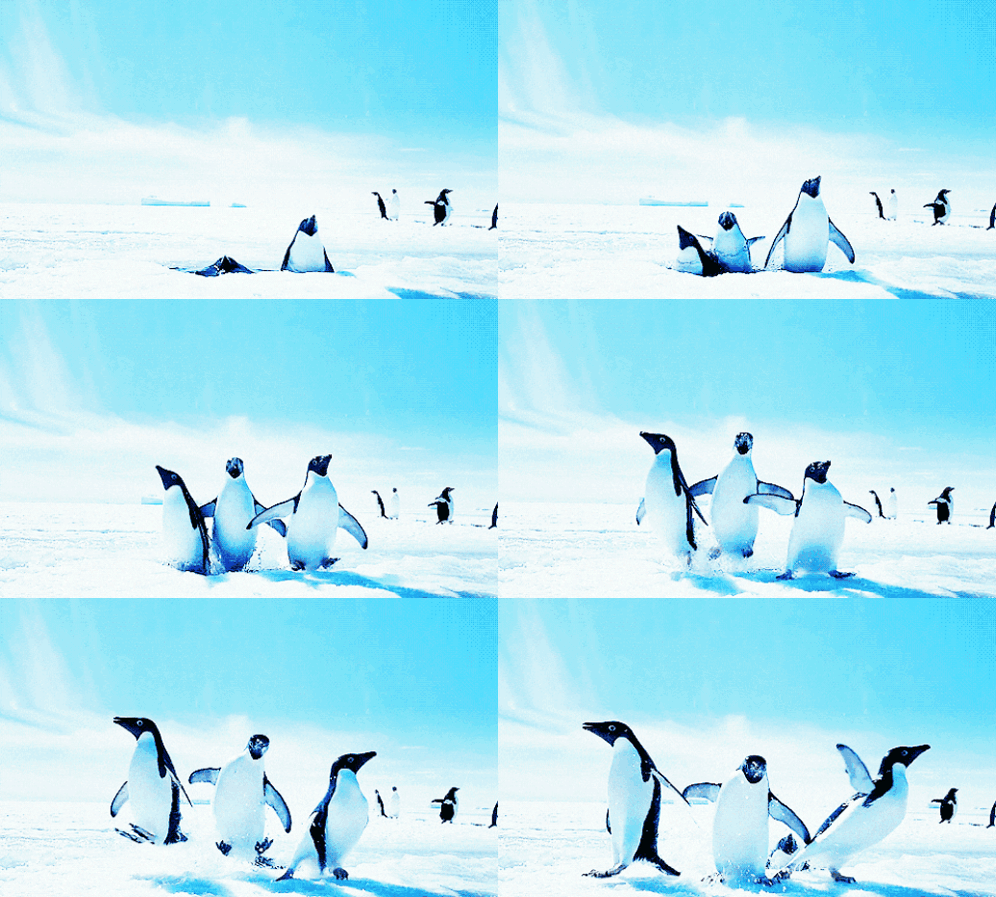
At its core, my reluctance to visit Antarctica stems from a mismatch between what the continent offers and what I seek in travel. I’m not an adventurer who craves extreme environments, nor am I a scientist driven to study its unique ecosystem. I value comfort, connection, and cultural richness, none of which Antarctica provides. The continent’s beauty is undeniable, but it’s a beauty I’m content to experience through photographs, films, or the accounts of others. Its isolation, harshness, and environmental fragility make it a place I’d rather leave undisturbed.
This isn’t to say Antarctica is without merit. For those who thrive on physical challenges, seek solitude, or are passionate about polar science, it’s undoubtedly a dream destination. But travel is deeply personal, and we’re all drawn to places that resonate with our values and desires. For me, the world is full of destinations that offer warmth, community, and stories—places where I can feel at home rather than like an intruder in an alien landscape. Antarctica, with its icy indifference, will remain a place I admire from a distance, a frozen frontier I’m happy to leave to braver souls.
Conclusion
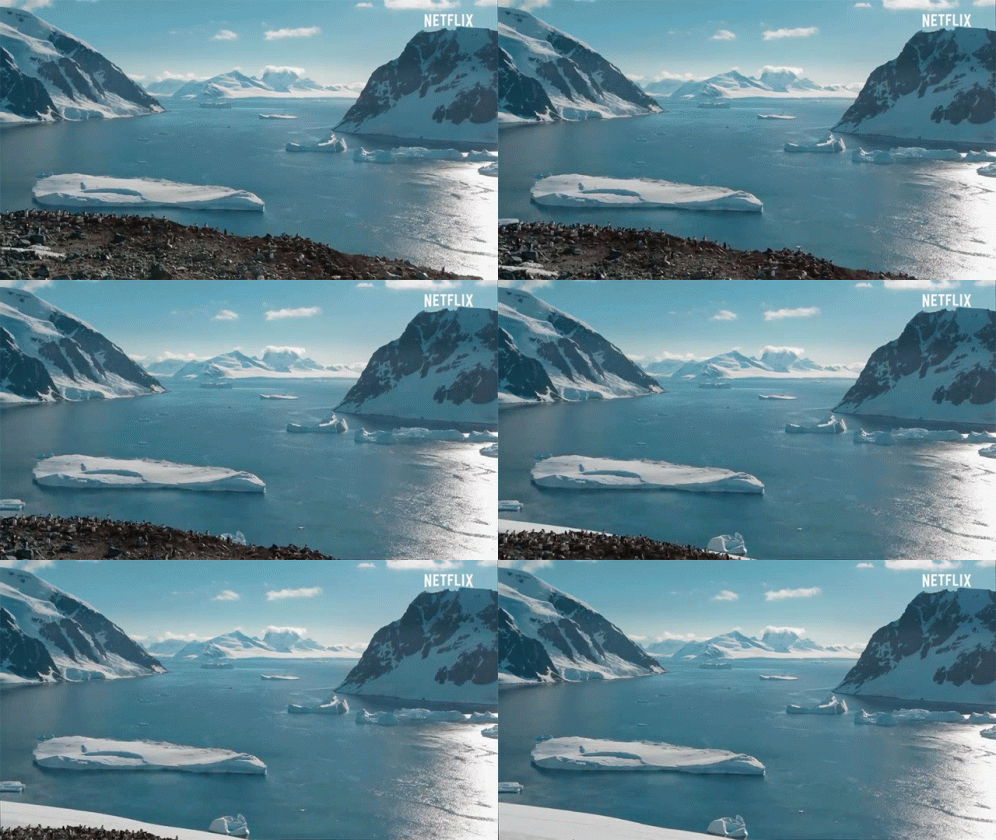
In a world brimming with diverse destinations, Antarctica stands out as a place I have no desire to visit. Its extreme climate, profound isolation, environmental vulnerabilities, lack of cultural appeal, and practical barriers make it an unappealing choice for someone who values comfort, connection, and sustainability in travel. While others may find inspiration in its vast, untouched wilderness, I’m content to explore places that feel more welcoming and less precarious. Travel is about finding joy, and for me, that joy lies far from the frozen reaches of the southernmost continent.

 kohsarblog
Leave a comment