“The secret to mastering any skill is that no one else needs to know you’re practicing it.” – Anonymous
A reminder that greatness often flourishes quietly until it’s ready to shine. Do you have a secret skill you’re working on?
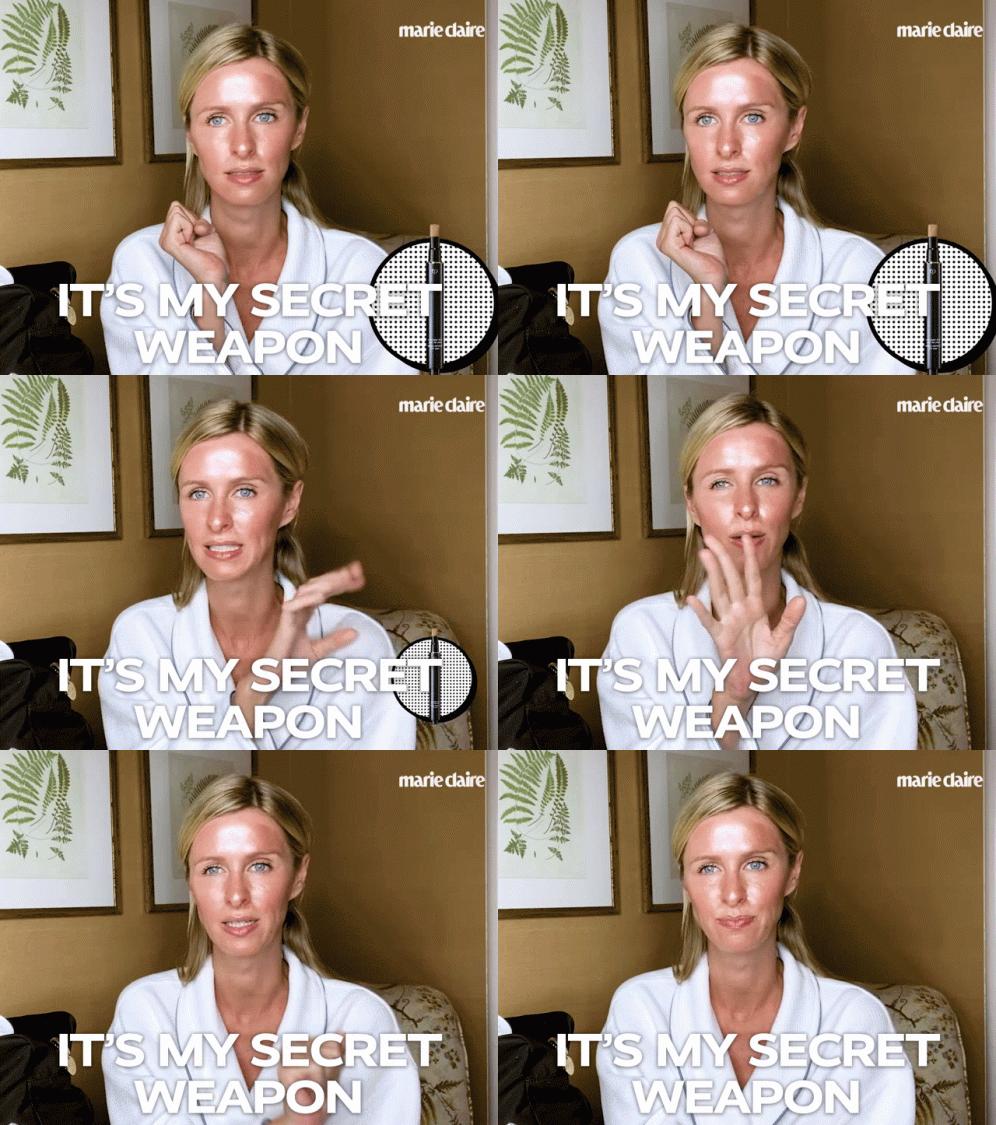
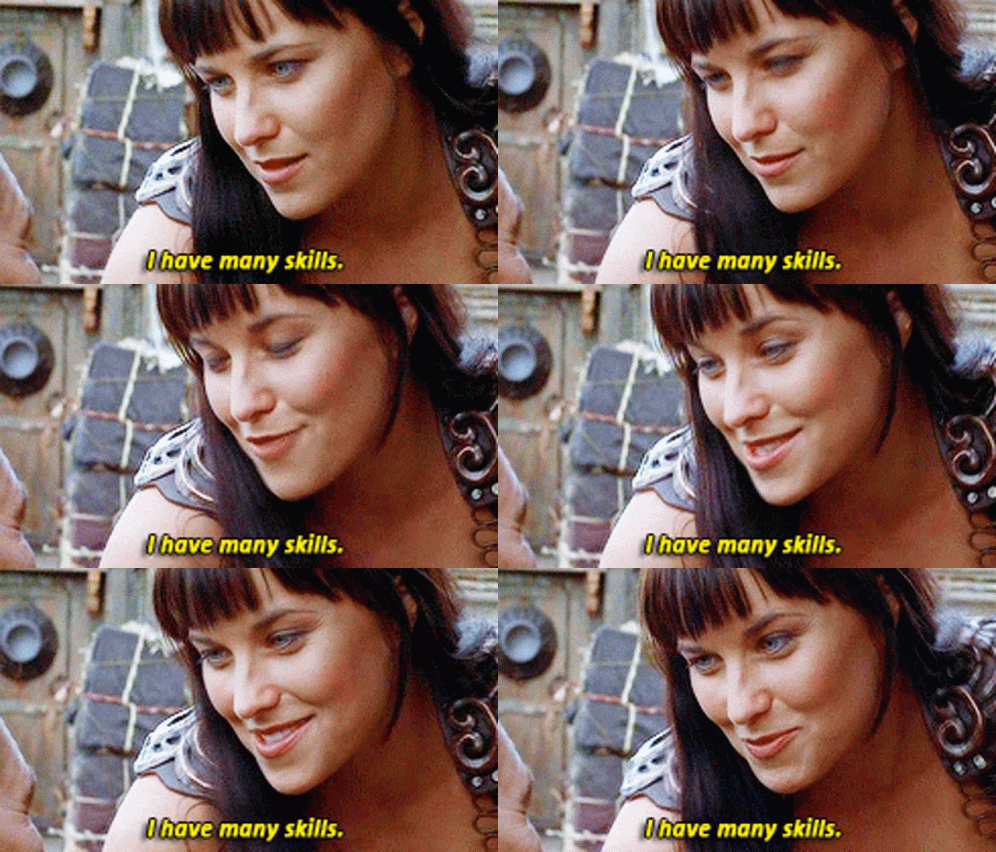
Introduction: The Allure of Secret Skills
Imagine possessing a talent so unique that it feels like a superpower—one you guard closely or daydream about mastering. Secret skills captivate our imagination, whether they’re tucked away in our repertoire or lingering on our wishlists. They spark curiosity, fuel aspirations, and often define the line between the ordinary and the extraordinary. In a world where sharing every achievement is the norm, there’s something thrilling about holding—or longing for—a skill that feels intimately personal. This post delves into the hidden talents people cherish, the abilities they yearn for, and the psychology behind keeping them under wraps.
The Hidden Talents Among Us

Secret skills often fly under the radar, overshadowed by more conventional talents. Yet these abilities can be transformative, offering both practical advantages and profound personal satisfaction.
Innate Gifts: The Unseen Brilliance
Some skills are innate, emerging unexpectedly. Take perfect pitch, the rare ability to identify or recreate musical notes without reference. Only 1 in 10,000 people have it, yet many go unnoticed outside musical circles. Similarly, synesthesia—where senses intertwine, like “tasting” colors—grants a unique lens to experience the world.
Example: A graphic designer might use their synesthesia to create visually harmonious layouts instinctively, never revealing how their mind blends hues with sounds.
Learned Mastery: The Quiet Achievers
Other skills are cultivated through relentless practice. Consider speed reading, mastered by figures like Theodore Roosevelt, who devoured books before breakfast. Or memory palaces, a technique used by memory champions to recall thousands of digits. These skills often stay hidden, deployed strategically in professions like law, medicine, or competitive fields.
Case Study: A lawyer might use advanced mnemonics to memorize case details, impressing colleagues without disclosing their method.
Unconventional Talents: The Quirky Edge
Then there are the oddly specific skills—like eyebrow wiggling or reciting pi to 100 digits—that become party tricks. While seemingly trivial, they foster connections and spark joy. Comedian Steve Martin famously mastered the banjo in secret before showcasing it in his acts, proving even whimsical skills can shape careers.
Why They Stay Hidden: Many fear judgment or unwanted attention. A programmer fluent in Klingon might avoid mentioning it at work, wary of stereotypes.
The Skills We Wish For: Between Reality and Fantasy

If secret skills are about what’s hidden, desired abilities reflect our deepest aspirations—rooted in reality or leaping into the fantastical.
Realistic Aspirations: Skills Within Reach
- Lucid Dreaming: Imagine controlling your dreams, a skill learnable through techniques like reality checks and journaling. It’s pursued by artists and problem-solvers seeking creative breakthroughs.
- Polyglotism: Fluency in multiple languages opens cultural doors. Many wish to learn Mandarin or Spanish rapidly, inspired by polyglots like Tim Doner, who spoke 20 languages by 18.
- Parkour: The art of movement, popularized by urban athletes, symbolizes freedom. It’s attainable with training but remains a bucket-list item for many.
Psychological Drive: These skills often stem from a desire for self-improvement or escaping routine.
Fantastical Desires: When Imagination Soars
- Invisibility: A metaphor for craving anonymity or observing life unfiltered.
- Teleportation: Born from a wish to transcend physical limits and explore effortlessly.
- Mind Reading: Reflects a longing to connect deeply or avoid misunderstanding.
Cultural Echoes: Superhero narratives, from X-Men to Harry Potter, amplify these desires, blending escapism with empowerment.
Bridge to Reality: While we can’t teleport, VR technology offers virtual exploration—proof that fantastical goals inspire real-world innovation.
Why Keep a Skill Secret?
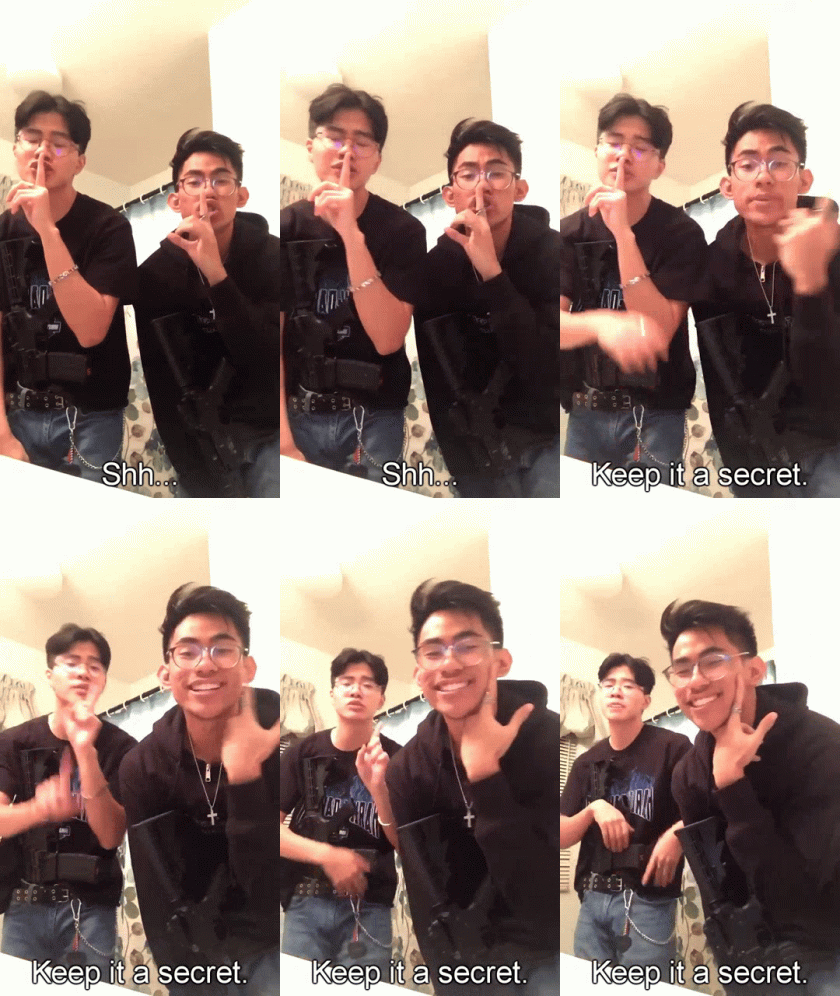
The choice to conceal a skill is as complex as the skill itself.
- Privacy and Identity: Talents can feel too personal to share, like a poet writing verses only for themselves.
- Fear of Judgment: Quirky skills might invite ridicule. A finance analyst who writes fanfiction anonymously exemplifies this.
- Strategic Advantage: Chess players often hide novel strategies until tournaments.
- Mystique and Control: Magicians like David Blaine capitalize on secrecy to enhance allure.
Quote: “The best secrets are the ones you keep from yourself.” — Anonymous
Cultivating Your Secret Skill: A Roadmap

Whether realistic or aspirational, developing a hidden ability requires strategy.
Step 1: Identify Your Passion
Start by asking: Does this skill solve a problem, bring joy, or fulfill a dream? A wish to master coding might stem from wanting to build an app.
Step 2: Break It Down
Use the Feynman Technique: Simplify complex skills into digestible parts. Learning guitar? Begin with chords, then scales, then songs.
Step 3: Practice Deliberately
Stanford studies show focused practice trumps hours of repetition. A 30-minute daily session on Duolingo beats cramming.
Step 4: Seek Resources
- Online Courses: Platforms like Coursera or MasterClass.
- Communities: Reddit groups, local clubs.
- Mentors: Connect with experts via LinkedIn or workshops.
Step 5: Embrace Failure
J.K. Rowling’s initial rejections didn’t stop her from writing. Persistence turns setbacks into comebacks.
Step 6: Track Progress
Journal milestones. A budding coder might celebrate building their first website.
Pro Tip: Pair your skill with a habit. Love cooking? Practice knife skills while prepping dinner.
Conclusion: Embrace Your Hidden Potential

Secret skills, whether held or coveted, are portals to self-discovery. They remind us that growth is personal, nonlinear, and often invisible. So, what’s your secret skill? Maybe it’s time to nurture it—or dare to share it. As Carl Jung said, “Who looks outside, dreams; who looks inside, awakes.”
Call to Action: Start today. Jot down one skill you’ve always wanted to master, and take one small step toward it. The journey itself is the reward.

Thank You
 kohsarblog
Leave a comment