“Superstition is the religion of feeble minds.” — Edmund Burke
It’s a sharp belief in superstitions can often stem from fear or lack of understanding. What are your thoughts on superstitions? Do you see them as fascinating cultural artifacts or unnecessary hurdles?
Title: Are You Superstitious? Exploring the Psychology, History, and Cultural Roots of Our Irrational Beliefs
We’ve all done it: knocked on wood to avoid jinxing good news, held our breath while passing a cemetery, or hesitated to walk under a ladder. Superstitions are woven into the fabric of daily life, transcending cultures, generations, and even logic. But why do seemingly rational people cling to beliefs that defy scientific explanation? What drives the human mind to assign meaning to random events or objects? And in an age of technological advancement, why do superstitions persist?
This deep dive into superstition explores its psychological underpinnings, historical origins, cultural diversity, and modern-day relevance. Whether you’re a skeptic or someone who crosses their fingers during a thunderstorm, this exploration might make you question why we think—and act—the way we do.
What Is Superstition? Bridging the Gap Between Fear and Control
At its core, superstition is the belief that certain actions, objects, or rituals can influence outcomes in ways that defy natural laws. These beliefs often arise from a desire to exert control over unpredictable situations. For example, an athlete might wear “lucky” socks during a game, not because the socks have magical properties, but because the ritual alleviates anxiety about performance.
Superstitions thrive in environments of uncertainty. When faced with chaos—whether it’s a job interview, a medical diagnosis, or a storm—humans crave order. Assigning meaning to rituals or symbols creates a sense of agency, even if it’s illusory. Psychologists call this the illusion of control, a cognitive bias that helps people cope with randomness.
But not all superstitions are harmless. Some can fuel harmful behaviors, like avoiding medical treatment in favor of “healing” rituals, or perpetuate stereotypes (e.g., the belief that black cats bring bad luck). Understanding the line between comforting tradition and dangerous delusion is key to navigating our relationship with superstition.
A Brief History of Superstition: From Ancient Rituals to Modern Habits
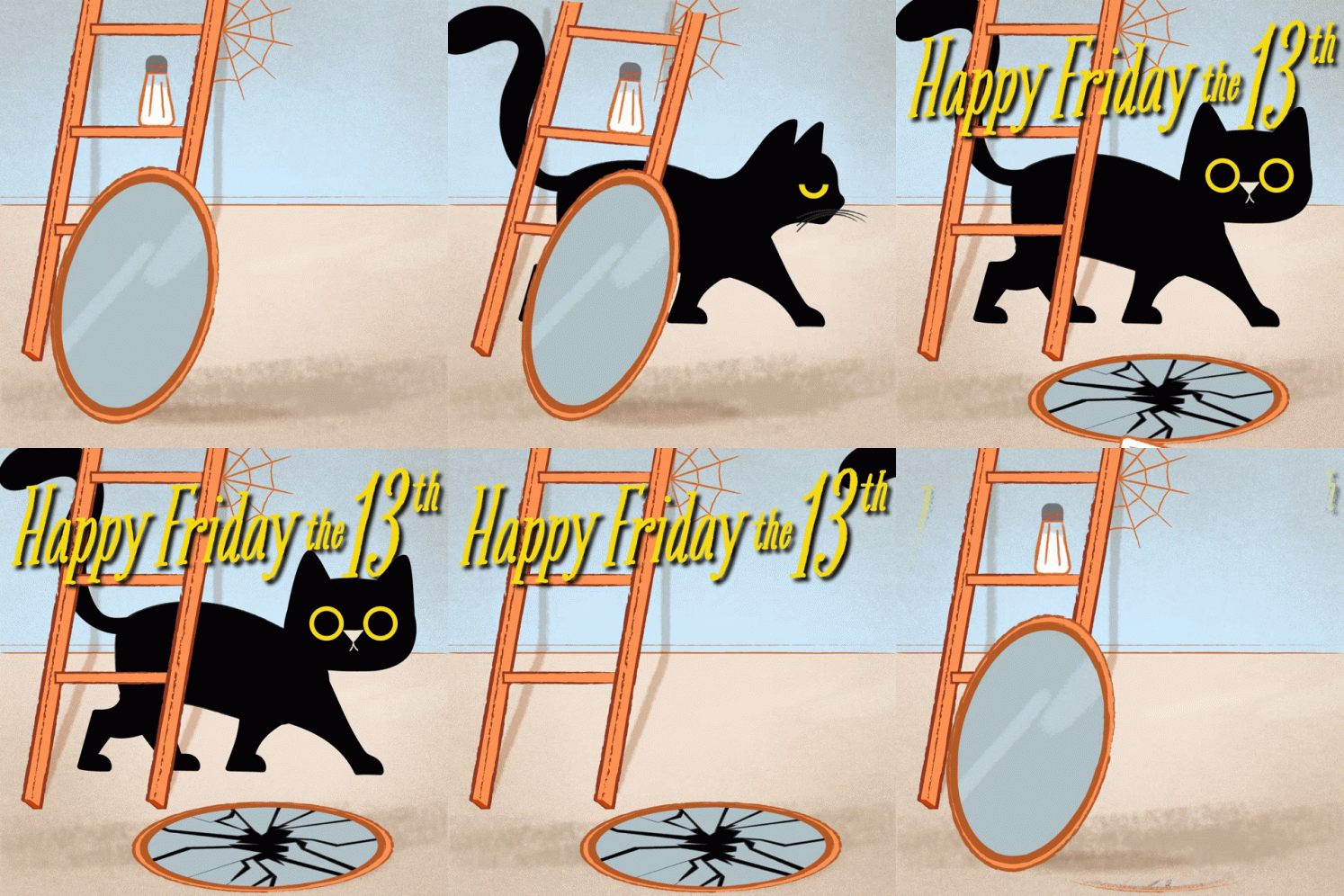
Superstitions are as old as humanity itself. Early humans, lacking scientific explanations for natural phenomena like thunderstorms, eclipses, or disease, turned to supernatural forces to make sense of their world.
- Ancient Civilizations: The Romans interpreted bird flights as omens from the gods. The Egyptians believed dreams were messages from the divine.
- Medieval Europe: The fear of witches and curses led to practices like hanging horseshoes (symbolizing the crescent moon, a protector against evil) or carrying “witch bottles” filled with nails to repel dark magic.
- The Number 13: This infamous superstition traces back to Norse mythology, where 12 gods were joined by a 13th—Loki—who orchestrated chaos. Later, Christianity linked 13 to Judas, the disciple who betrayed Jesus.
Many modern superstitions are remnants of these ancient beliefs, repackaged through folklore, religion, and pop culture.
Cultural Superstitions: A Global Tapestry of Beliefs
Superstitions vary wildly across cultures, reflecting unique histories, environments, and values. Here’s a glimpse into the fascinating diversity of irrational beliefs worldwide:
1. Asia: Numbers, Spirits, and Ancestors
- China: The number 4 (sounding like “death” in Mandarin) is avoided in buildings, phone numbers, and license plates. Conversely, 8 symbolizes prosperity.
- Japan: Cutting nails at night is taboo, as folklore claims it could lead to an early death.
- India: Astrology dictates major life decisions, from weddings to business launches, to align with auspicious planetary positions.
2. Europe: Folklore and Religious Fears
- Italy: The “malocchio” (evil eye) is warded off with red coral horns or hand gestures.
- Russia: Whistling indoors is believed to “blow away” wealth.
- Ireland: Fairy trees (lonely hawthorns) are left untouched, lest fairies curse the land.
3. The Americas: Blending Traditions
- Mexico: Día de los Muertos honors ancestors with offerings to guide their spirits home.
- USA: Sports fans wear team jerseys for “good luck,” and many avoid stepping on baseball field baselines.
- Brazil: Pouring rice behind moving trucks ensures a safe journey, a blend of Indigenous and African traditions.
4. Africa: Ancestral Spirits and Nature
- Nigeria: A child born with a caul (amniotic membrane) is believed to possess psychic powers.
- South Africa: Burning imphepho herbs communicates with ancestors during rituals.
These examples reveal how superstitions often serve as cultural shorthand, preserving collective memories and values.
The Psychology of Superstition: Why Our Brains Love Patterns
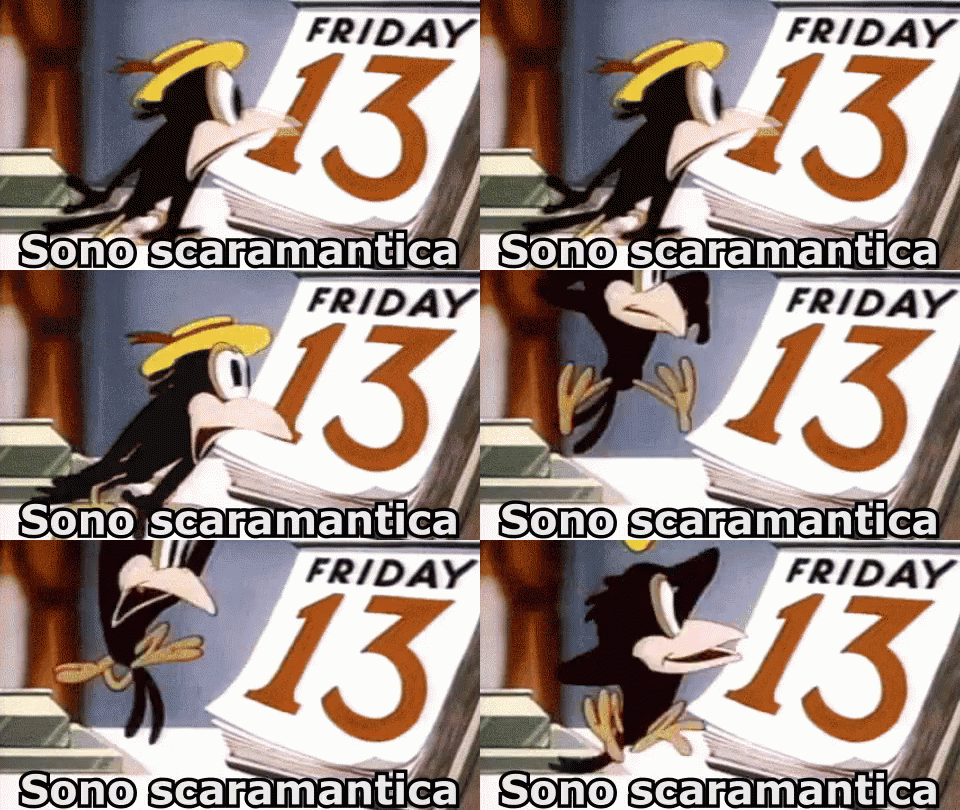
Why do educated, logical people still throw salt over their shoulders or avoid Friday the 13th? Neuroscience and psychology offer compelling answers:
1. Pattern Recognition Gone Haywire
Humans are wired to detect patterns—a survival mechanism that helped our ancestors spot predators or find food. But this tendency also leads us to see connections where none exist, a phenomenon called apophenia. For example, if you wear a red shirt and get a promotion, your brain might link the two events, even if they’re unrelated.
2. Operant Conditioning
B.F. Skinner’s experiments with pigeons showed that random rewards reinforce superstitious behaviors. In one study, pigeons fed at random intervals began associating their actions (like spinning) with food, repeating the behavior despite its irrelevance. Humans do the same: A student who aces a test after using a “lucky” pen may keep the pen for future exams.
3. Coping Mechanism for Anxiety
Rituals reduce stress by providing structure. A 2010 study found that people who performed “lucky” rituals before tasks (like counting to 10) persisted longer at challenging puzzles, as the rituals boosted confidence.
4. Evolutionary Survival
Anthropologist Stewart Guthrie argues that assuming intentional forces behind random events (e.g., rustling grass = a predator) was safer than assuming randomness. Better to mistake a rock for a bear than vice versa!
Superstition in the Modern World: From Smartphones to Space Travel

In an era of AI and quantum physics, superstitions haven’t vanished—they’ve evolved.
- Tech Superstitions: Gamers follow pre-game rituals (e.g., specific mouse-click patterns) to “ensure” victory. Others avoid charging phones overnight due to unfounded battery myths.
- Celebrity Rituals: Beyoncé won’t start a show without spraying her throat with honey. Michael Jordan wore his college shorts under his NBA uniform for “luck.”
- Space Oddities: Astronauts eat cake before launches (a Russian tradition), and Apollo 13’s ill-fated mission number reinforced fears of the number 13.
Even science isn’t immune. The “Higgs boson” was nicknamed the “God particle” due to media sensationalism, blending physics with mystical undertones.
The Dark Side of Superstition: When Beliefs Turn Harmful

While many superstitions are benign, others perpetuate fear, discrimination, or violence:
- Witch Hunts: Over 50,000 people (mostly women) were executed in Europe between 1500–1700 for “witchcraft.” Modern witch hunts persist in parts of Africa and India.
- Medical Quackery: Anti-vaccine myths, crystal healing, or refusing blood transfusions due to religious beliefs can have deadly consequences.
- OCD and Anxiety: For some, superstitious rituals spiral into compulsive behaviors, like handwashing 100 times to “prevent” illness.
Critical thinking and education are vital to distinguishing comforting traditions from harmful dogma.
Should You Embrace or Reject Superstitions? Finding Balance

There’s no one-size-fits-all answer. For many, superstitions are a form of cultural identity or a harmless stress-reliever. For others, they’re a barrier to rational decision-making. Consider:
- Pros: Boosts confidence, preserves traditions, fosters social bonds (e.g., team rituals).
- Cons: Fuels irrational fears, wastes time/money, justifies prejudice.
The key is self-awareness. If a “lucky charm” helps you stay calm before a speech, embrace it—but don’t blame the charm if things go wrong.
Conclusion: Are Superstitions a Flaw—or a Feature—of Humanity?
Superstitions reveal our deepest fears, hopes, and quirks. They remind us that humans are not purely logical beings; we’re storytellers, pattern-seekers, and meaning-makers. In a world brimming with uncertainties, these beliefs offer a semblance of control—a way to navigate the chaos with a touch of magic.
So, are you superstitious? However you answer, remember: The human mind
 kohsarblog
Leave a comment