Here’s a thought-provoking quote about history:
“History is not a burden on the memory but an illumination of the soul.” — John Dalberg-Acton
Do you have a favorite historical figure or event that inspires you?
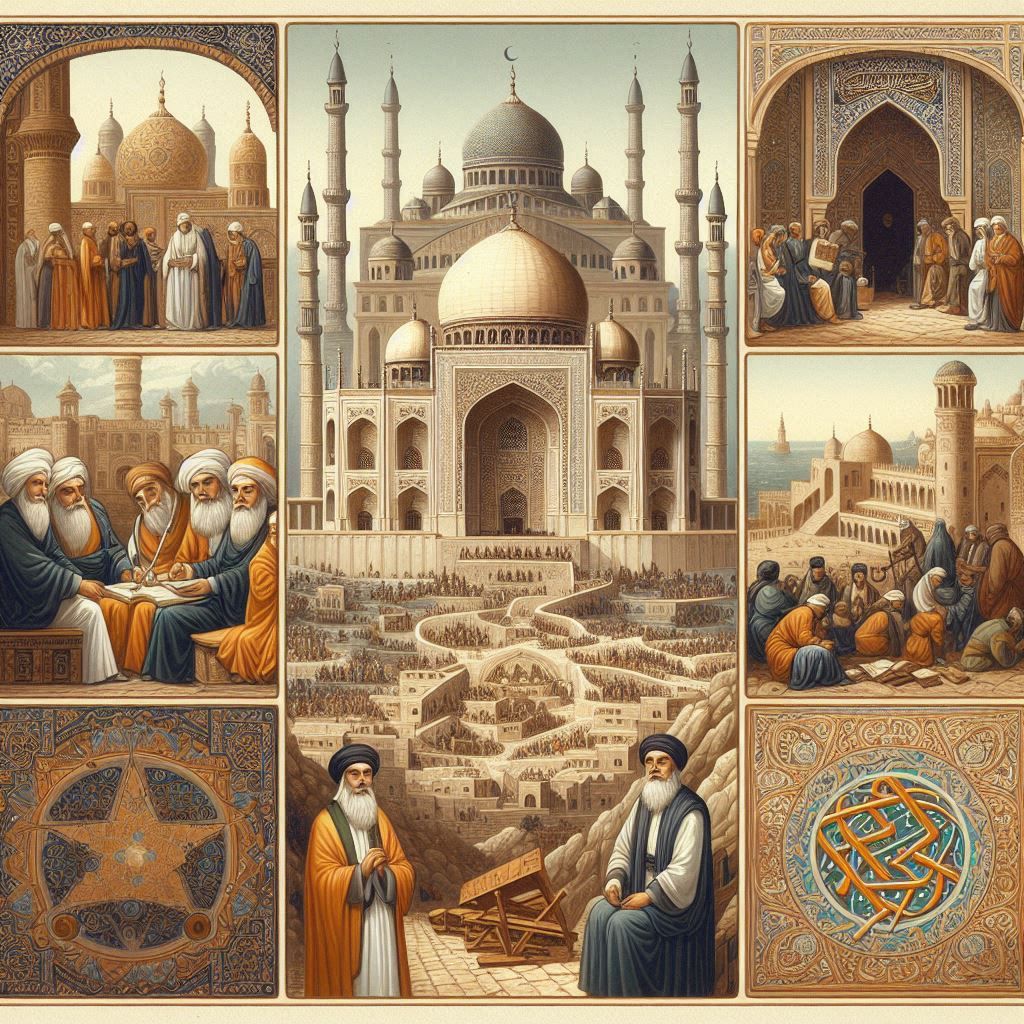

25 Major Events in Muslim History
Muslim history is rich with significant events that have shaped the world. Here are 25 major historical events that stand out:
- Birth of Prophet Muhammad (570 CE): The birth of the Prophet Muhammad in Mecca marks the beginning of a new era in religious history¹.
- First Revelation (610 CE): Prophet Muhammad received his first revelation from the Angel Gabriel on Mount Hira¹.
- Hijra (622 CE): The migration of Prophet Muhammad and his followers from Mecca to Medina, marking the start of the Islamic calendar¹.
- Battle of Badr (624 CE): A significant victory for the Muslims against the Quraysh of Mecca¹.
- Conquest of Mecca (630 CE): Prophet Muhammad and his followers peacefully conquered Mecca, establishing it as the spiritual center of Islam¹.
- Death of Prophet Muhammad (632 CE): The Prophet’s death in Medina led to the establishment of the Rashidun Caliphate¹.
- Battle of Yarmouk (636 CE): A decisive battle where Muslim forces defeated the Byzantine Empire, leading to the Muslim control of Syria¹.
- Battle of Qadisiyyah (636 CE): This battle resulted in the Muslim conquest of Persia¹.
- Establishment of the Umayyad Caliphate (661 CE): The Umayyad dynasty expanded the Muslim empire significantly².
- Battle of Karbala (680 CE): The martyrdom of Husayn ibn Ali, which is commemorated by Shia Muslims during Ashura².
- Abbasid Revolution (750 CE): The overthrow of the Umayyad Caliphate and the establishment of the Abbasid Caliphate².
- Golden Age of Islam (8th-13th centuries): A period of significant advancements in science, medicine, mathematics, and culture².
- Crusades (1096-1291 CE): A series of religious wars initiated by European Christians to reclaim the Holy Land from Muslim control².
- Sack of Baghdad (1258 CE): The Mongol invasion led to the destruction of Baghdad, ending the Abbasid Caliphate².
- Rise of the Ottoman Empire (1299 CE): The establishment of one of the longest-lasting empires in history².
- Fall of Constantinople (1453 CE): The Ottoman Empire captured Constantinople, marking the end of the Byzantine Empire².
- Battle of Lepanto (1571 CE): A significant naval battle where the Holy League defeated the Ottoman fleet².
- Establishment of the Mughal Empire (1526 CE): The Mughal Empire in India became a major center of culture and power².
- Battle of Plassey (1757 CE): Marked the beginning of British colonial rule in India².
- End of the Ottoman Empire (1922 CE): The dissolution of the Ottoman Empire after World War I².
- Creation of Pakistan (1947 CE): The partition of India led to the creation of Pakistan as a separate Muslim-majority nation².
- Iranian Revolution (1979 CE): The overthrow of the Shah of Iran and the establishment of an Islamic Republic².
- Soviet-Afghan War (1979-1989 CE): A conflict that had significant implications for the Muslim world².
- September 11 Attacks (2001 CE): A series of terrorist attacks in the United States that had a profound impact on global politics².
- Arab Spring (2010-2012 CE): A series of uprisings and protests across the Arab world demanding political reform².
These events highlight the dynamic and influential history of the Muslim world, showcasing its profound impact on global civilization.
¹: World History Encyclopedia
²: Wikipedia
What other aspects of Muslim history are you interested in exploring?
Source:
(1) Islam Timeline – World History Encyclopedia. https://www.worldhistory.org/timeline/islam/.
(2) Timeline of the history of Islam – Wikipedia. https://en.wikipedia.org/wiki/Timeline_of_the_history_of_Islam.
(3) The Untold Story: The Rise of Islam Timeline History – MagnifyMinds. https://magnifymind.com/rise-of-islam-timeline/.
(4) Chronology – Islamic History. https://islamichistory.org/chronology/.
(5) Islam Timeline – Have Fun With History. https://www.havefunwithhistory.com/islam-timeline/.

 kohsarblog
Leave a comment