Quote on the role of AI in future cities:
“AI will make our cities smarter and more efficient, but we need to ensure it’s used ethically.” – Carlo Ratti³
What do you think about the ethical considerations of AI in urban development?
(1) 75 Best Quotes on AI from Bezos, Hawking, and More [2024]. https://bing.com/search?q=quote+on+city+of+ai.
(2) 72 Quotes about AI That Inspire a Look Into the Future. https://createandgo.com/quotes-about-ai.
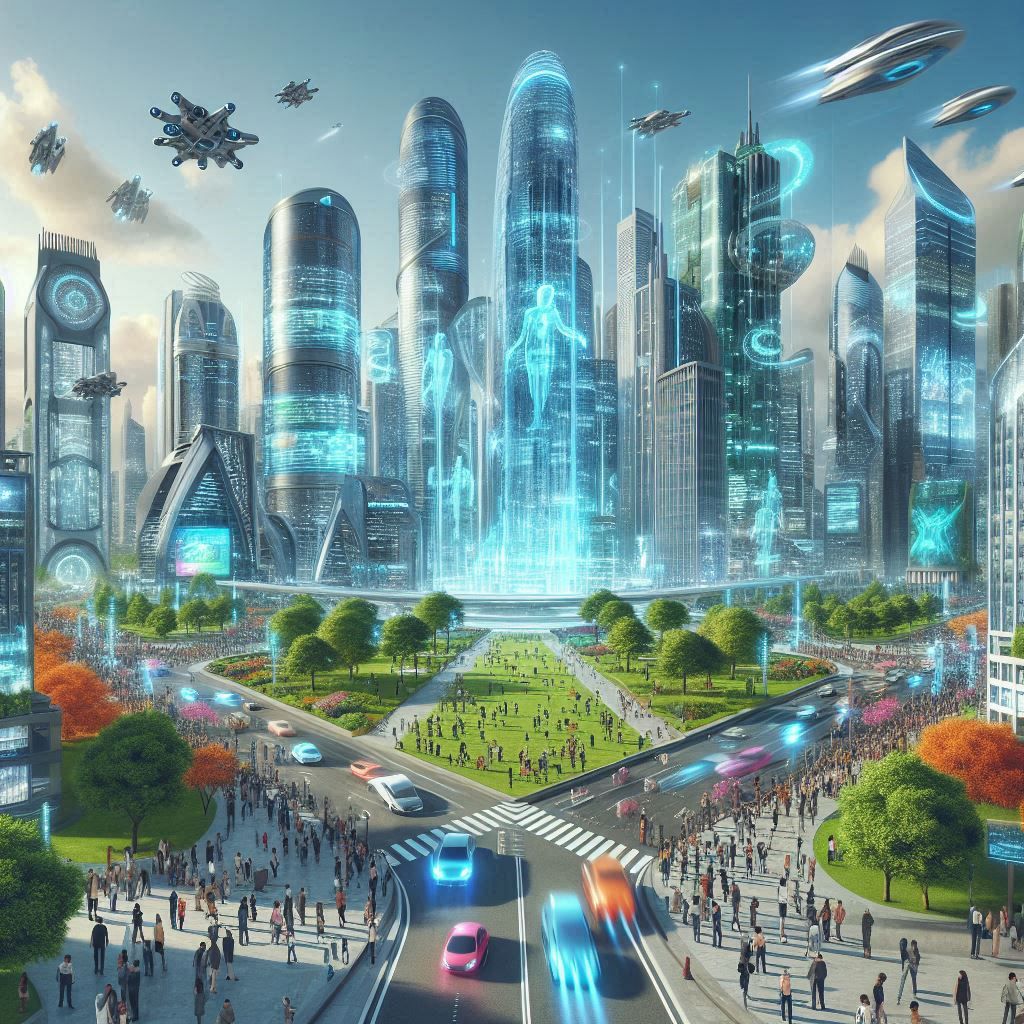
Designing the City of the Future: A Vision for Sustainable Urban Living
As we look towards the future, the design of our cities will play a crucial role in addressing the challenges of urbanization, climate change, and social inequality. Here’s a vision for how we might design the city of the future:
1. Sustainability at the Core
The foundation of future cities will be sustainability. This means integrating green spaces, renewable energy sources, and efficient waste management systems. Buildings will be designed to be energy-efficient, using materials that reduce carbon footprints. Urban farming and green rooftops will not only provide fresh produce but also help in reducing urban heat islands¹.
2. Smart Infrastructure
Technology will be seamlessly integrated into the urban fabric. Smart grids, IoT devices, and AI will manage everything from traffic flow to energy consumption. Public transportation will be highly efficient, with autonomous electric vehicles and high-speed trains reducing the need for personal cars².
3. Human-Centric Design
Cities will be designed with people in mind. This means creating walkable neighborhoods, accessible public spaces, and inclusive facilities for all age groups and abilities. Mixed-use developments will ensure that residential, commercial, and recreational spaces are within easy reach, reducing the need for long commutes³.
4. Resilient and Adaptable
Future cities will be built to withstand environmental challenges. This includes flood-resistant infrastructure, earthquake-proof buildings, and adaptable public spaces that can be repurposed as needed. Urban planning will prioritize resilience to ensure that cities can bounce back from natural disasters and other disruptions⁴.
5. Community and Connectivity
Strong communities will be at the heart of future cities. Social infrastructure such as community centers, parks, and cultural hubs will foster a sense of belonging and engagement. High-speed internet and digital platforms will connect residents, enabling remote work and virtual collaboration.
6. Health and Well-being
The design of future cities will prioritize the health and well-being of their inhabitants. This includes clean air and water, ample recreational spaces, and access to healthcare facilities. Mental health will also be a focus, with quiet zones, meditation spaces, and nature trails integrated into urban planning.
7. Cultural Preservation
While embracing modernity, future cities will also preserve their cultural heritage. Historical landmarks and traditional architecture will be maintained and celebrated, creating a blend of old and new that reflects the city’s unique identity.
Conclusion
Designing the city of the future is a complex but exciting challenge. By focusing on sustainability, smart infrastructure, human-centric design, resilience, community, health, and cultural preservation, we can create urban environments that are not only livable but also thrive in the face of future challenges. The city of the future will be a testament to human ingenuity and our commitment to creating a better world for generations to come.
¹: World Economic Forum
²: ArchDaily
³: ArchDaily
⁴: Inverse
: World Economic Forum
: ArchDaily
: ArchDaily
What aspects of future city design are you most interested in?
Source: Conversation with Copilot, 8/22/2024
(1) This is what the cities of the future could look like. https://www.weforum.org/agenda/2020/12/future-cities-challenges-reimagine-urban-landscapes/.
(2) 7 Architectural Considerations that are Shaping Future Cities. https://www.archdaily.com/927262/7-architectural-considerations-that-are-shaping-future-cities.
(3) The 5 Guiding Principles for an Ideal City | ArchDaily. https://www.archdaily.com/957073/the-5-guiding-principles-for-an-ideal-city.
(4) 7 strategies for creating the ideal city of the future – Inverse. https://www.inverse.com/innovation/ideal-city-of-the-future-strategies.

AI will be a cornerstone in the development and functioning of future cities. Here are some key roles AI will play:
1. Smart Infrastructure Management
AI will optimize the management of city infrastructure, including energy grids, water supply, and waste management. Predictive maintenance powered by AI will help in identifying and addressing issues before they become major problems, ensuring smooth and efficient operations.
2. Traffic and Transportation
AI will revolutionize urban transportation by managing traffic flow, reducing congestion, and improving public transit systems. Autonomous vehicles and AI-driven traffic management systems will make commuting faster and more efficient.
3. Public Safety and Security
AI will enhance public safety through advanced surveillance systems, predictive policing, and emergency response management. AI algorithms can analyze data to predict and prevent crimes, as well as coordinate emergency services more effectively.
4. Environmental Monitoring
AI will play a crucial role in monitoring and managing environmental factors such as air quality, noise levels, and waste. AI-powered sensors and data analytics will help cities maintain a healthy environment and respond quickly to environmental hazards.
5. Healthcare and Well-being
AI will transform healthcare in cities by enabling personalized medicine, predictive diagnostics, and efficient healthcare management. AI-driven health monitoring systems can provide real-time data to healthcare providers, improving patient outcomes and reducing healthcare costs.
6. Urban Planning and Development
AI will assist in urban planning by analyzing vast amounts of data to make informed decisions about land use, zoning, and infrastructure development. AI can simulate different scenarios to help planners design more efficient and sustainable cities.
7. Citizen Engagement and Services
AI will improve citizen engagement by providing personalized services and real-time information. Chatbots and virtual assistants will help residents access city services, report issues, and stay informed about local events and developments.
8. Energy Efficiency
AI will optimize energy consumption in buildings and public spaces, reducing waste and lowering costs. Smart grids powered by AI will balance energy supply and demand, integrating renewable energy sources more effectively.
Conclusion
AI will be integral to the functioning of future cities, making them smarter, safer, and more sustainable. By leveraging AI, cities can improve the quality of life for their residents, address urban challenges more effectively, and create a more connected and efficient urban environment.
: World Economic Forum
: Forbes
: Brookings
: MIT Technology Review
: Harvard Business Review
: Smart Cities Dive
: McKinsey & Company
: World Economic Forum
Which aspect of AI in future cities excites you the most?

 kohsarblog
Leave a comment