“Science is a way of life. Science is a perspective. Science is the process that takes us from confusion to understanding in a manner that’s precise, predictive, and reliable—a transformation, for those lucky enough to experience it, that is empowering and emotional.” — Brian Greene
Science truly empowers us to explore the mysteries of the universe and uncover its hidden truths. 🌟²
Source: Conversation with Copilot, 7/4/2024
(1) Science Quotes – Brainy Quote. https://www.brainyquote.com/topics/science-quotes.
(2) 170 Science Quotes from Top Scientists | Keep Inspiring Me. https://www.keepinspiring.me/science-quotes/.
(3) Top 10 Science Quotes – Brainy Quote. https://www.brainyquote.com/lists/topics/top-10-science-quotes.
(4) 30 Brilliant Scientist Quotes. https://www.famousscientists.org/30-brilliant-scientist-quotes/.

- Atoms and Molecules: Chemistry investigates atoms (the building blocks of matter) and molecules (combinations of atoms). It explores their bonding, electronic structure, and behavior.
- Chemical Reactions: Understanding chemical reactions is central to chemistry. Whether it’s combustion, acid-base reactions, or redox processes, chemists analyze how substances transform.
- Periodic Table: The periodic table organizes elements based on their properties. Each element has a unique atomic number, symbol, and characteristic behavior.
- Thermodynamics: Chemistry deals with energy changes during reactions. Thermodynamics explains concepts like enthalpy, entropy, and Gibbs free energy.
- Quantum Chemistry: Here, chemistry meets physics. Quantum chemistry uses quantum mechanics to predict molecular properties, electronic structures, and spectroscopic behavior.
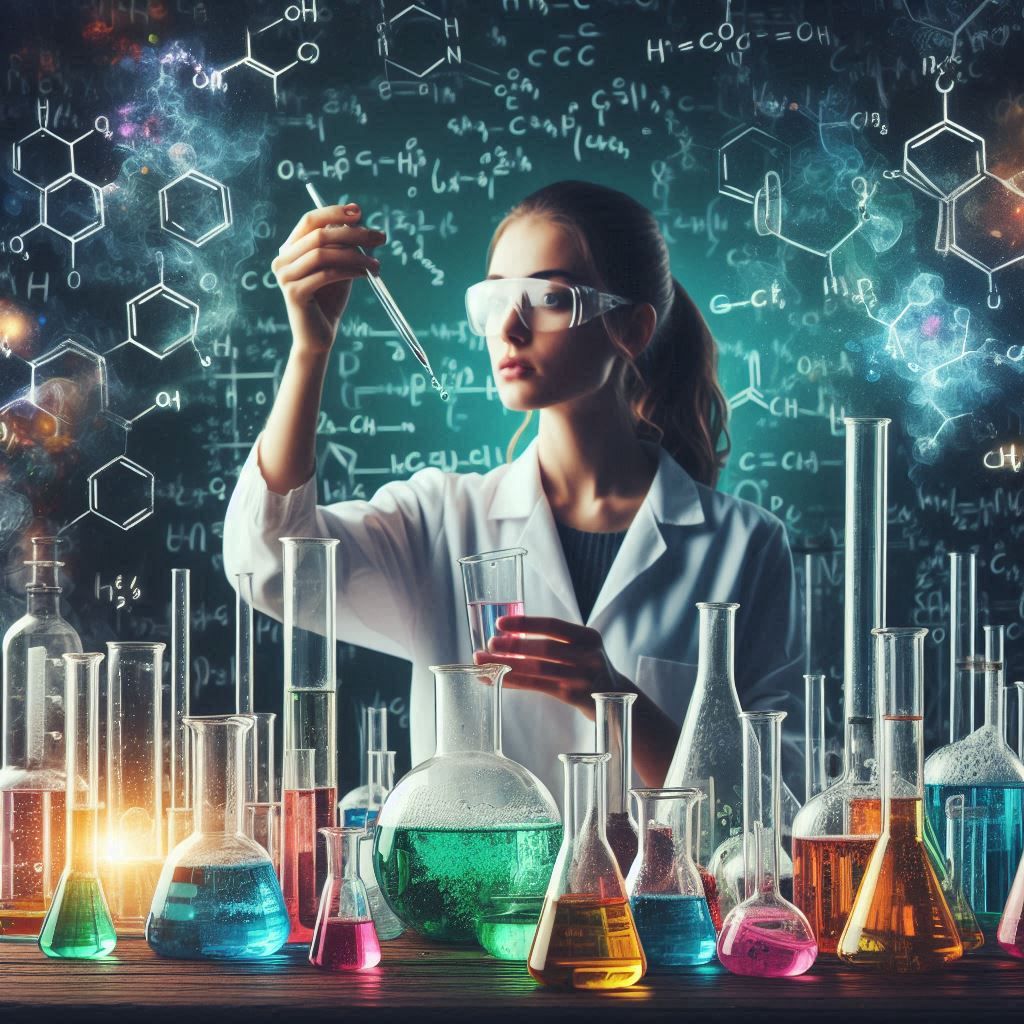
Certainly! Let’s delve into the fascinating realms of physics and chemistry.
Physics:
Physics is the study of the fundamental laws that govern the behavior of the universe. Here are some key aspects:
- Nature’s Laws: Physics seeks to understand the underlying principles that describe how matter and energy interact. These laws include Newton’s laws of motion, Maxwell’s equations for electromagnetism, and Einstein’s theory of relativity.
- Particle Physics: At the smallest scales, physicists explore elementary particles like quarks, leptons, and bosons. The Standard Model of particle physics describes their interactions.
- Quantum Mechanics: Quantum mechanics governs the behavior of particles at the atomic and subatomic levels. It introduces concepts like wave functions, superposition, and quantum entanglement.
- Cosmology: Physics also delves into the cosmos, studying the origin, evolution, and fate of the universe. Topics include the Big Bang theory, dark matter, and cosmic inflation.
Chemistry:
Chemistry focuses on matter—its composition, structure, properties, and transformations. Here’s what you need to know:
In summary, while physics explores the fundamental laws of nature, chemistry dives into the intricacies of matter and its transformations. Together, they form a powerful duo, enriching our understanding of the universe. 🌟
References:
- Relationship between chemistry and physics – Wikipedia
- What Is The Difference Between Chemistry And Physics?
- Physical science | Definition, History, & Topics | Britannica
- What distinguishes between physics and chemistry?
Source: Conversation with Copilot, 7/4/2024
(1) Relationship between chemistry and physics – Wikipedia. https://en.wikipedia.org/wiki/Relationship_between_chemistry_and_physics.
(2) What Is The Difference Between Chemistry And Physics? Learn the Key …. https://physics-network.org/what-is-the-difference-between-chemistry-and-physics-learn-the-key-differences-here/.
(3) Physical science | Definition, History, & Topics | Britannica. https://www.britannica.com/science/physical-science.
(4) What distinguishes between physics and chemistry?. https://physics.stackexchange.com/questions/27837/what-distinguishes-between-physics-and-chemistry.
(5) en.wikipedia.org. https://en.wikipedia.org/wiki/Relationship_between_chemistry_and_physics.
Certainly! Chemistry plays a crucial role in various practical applications across different fields. Here are some notable examples:
- Medicine and Pharmaceuticals:
- Drug discovery and development rely on understanding chemical interactions within the human body.
- Analytical chemistry ensures the safety and efficacy of medications.
- Pharmacokinetics studies drug absorption, distribution, metabolism, and excretion.
- Materials Science and Engineering:
- Polymer chemistry creates plastics, fibers, and coatings.
- Nanotechnology involves designing materials at the nanoscale for electronics, sensors, and medical devices.
- Metallurgy and ceramics benefit from chemical principles.
- Environmental Science:
- Environmental chemistry assesses pollutants, water quality, and soil contamination.
- Green chemistry promotes sustainable practices and reduces environmental impact.
- Climate science studies greenhouse gases and their effects.
- Energy Production and Storage:
- Battery technology relies on electrochemistry.
- Fuel cells convert chemical energy into electricity.
- Photovoltaic cells (solar panels) use semiconductors to generate electricity.
- Food and Agriculture:
- Food chemistry ensures food safety, preservation, and flavor.
- Fertilizers and pesticides are designed based on chemical principles.
- Genetic modification involves understanding DNA and protein chemistry.
- Forensics and Criminal Investigations:
- Analytical techniques identify substances in crime scenes (e.g., toxicology, DNA analysis).
- Forensic chemistry helps solve cases by analyzing evidence.
- Cosmetics and Personal Care Products:
- Formulation chemistry creates skincare products, perfumes, and cosmetics.
- Understanding surfactants, emulsions, and pH is essential.
- Art Conservation and Restoration:
- Chemistry helps preserve artworks, manuscripts, and historical artifacts.
- Restorers use chemical techniques to repair and stabilize materials.
- Industrial Processes:
- Chemical engineering optimizes production processes (e.g., petrochemicals, paper, textiles).
- Catalysis accelerates chemical reactions in industry.
- Analytical Techniques:
- Spectroscopy (UV-Vis, IR, NMR) identifies compounds.
- Chromatography separates mixtures.
- Mass spectrometry provides molecular information.
Remember that chemistry is everywhere—whether you’re cooking, cleaning, or exploring the cosmos. Its applications touch our daily lives in countless ways! 🌟
References:
- American Chemical Society (ACS)
- Royal Society of Chemistry (RSC)
- Chemistry World
- Chemical & Engineering News (C&EN)

Certainly! Materials science is a dynamic field with ongoing discoveries. Here are some recent breakthroughs:
- Atomic-Level Architecture Detection:
- Researchers at the University of Sydney developed a new microscopy method using atom probe tomography (APT). It allows detection of tiny changes in the atomic-level architecture of crystalline materials.
- This breakthrough helps understand short-range order (SRO), which influences material properties. It could lead to stronger alloys for aerospace, advanced semiconductors, and improved magnets¹.
- Advanced Materials:
- Titanium fluoride phosphate, self-healing polymer gel, platinum-gold alloy, and composite metal foam are examples of novel materials.
- These materials offer specific properties for innovative product designs and manufacturing³.
- Metamaterials and Energy Storage:
- Metamaterials, created using advanced tools, enhance carbon fiber composites for lighter vehicles and durable jet engines.
- Breakthroughs in energy storage impact batteries and renewable energy systems⁴.
Remember, materials science continually evolves, driving progress in technology, sustainability, and industry! 🌟
Source: Conversation with Copilot, 7/4/2024
(1) Researchers unlock ‘materials genome’, opening possibilities for next …. https://www.sciencedaily.com/releases/2024/07/240702135503.htm.
(2) 9 Material Discoveries that Could Transform Manufacturing. https://www.asme.org/topics-resources/content/9-material-discoveries-that-could-transform-manufacturing.
(3) 3 Major Materials Science Breakthroughs—and Why They Matter for the Future. https://singularityhub.com/2020/05/21/3-major-materials-science-breakthroughs-and-why-they-matter-for-the-future/.
(4) Materials Science News – Chemistry News – Phys.org. https://phys.org/chemistry-news/materials-science/.
(5) Top 10 Material Trends & Innovations in 2024 | StartUs Insights. https://www.startus-insights.com/innovators-guide/top-10-materials-industry-trends-innovations-2020-beyond/.
(6) Getty Images. https://www.gettyimages.com/detail/news-photo/researcher-maintains-equipment-at-the-accelerator-radio-news-photo/1565361690.

 kohsarblog
Leave a comment