. Here are some of its key uses:
Typing and Formatting:
Quotation marks: Single quotes are commonly used within double quotes when you want to nest quotations within a sentence. For example: “She said, ‘This cake is delicious!’”
Apostrophes: They are used for contractions (e.g., can’t, it’s) and possessive nouns (e.g., the dog’s tail).
Smart quotes: Some software automatically converts straight quotes to “smart quotes,” which have a more curved and elegant appearance.
Programming:
Character literals: In many programming languages, single quotes denote a single character, while double quotes represent strings of characters. For example, in Python, ‘a’ is a character, while “hello” is a string.
String delimiters: In some languages, single quotes can also be used for specific string types, like raw strings in Python.
Other Uses:
Keyboard shortcuts: Certain key combinations involving the single quote key can trigger specific actions depending on the software and operating system.
File paths: On some systems, including Linux and macOS, single quotes can be used to escape special characters in file paths.
https://youtube.com/watch?v=BvsTcuyERCc&si=sVGDmdQeZEc7jFqF
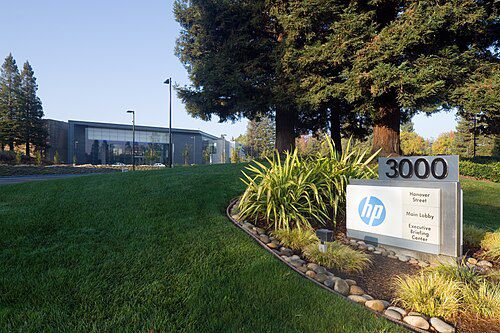
The Unsung Hero: How HP Became a Power Player in the Computer Revolution (But It Wasn’t Their First Act)
Imagine a world without personal computers. No Googling your burning questions, no streaming your favorite shows, and definitely no online shopping sprees (unless you count snail mail and catalogs!). While the IBM PC may be etched in our collective memory as the “first” personal computer, history reveals a different tale, one where a company named Hewlett-Packard (HP) played a pivotal, yet often overlooked, role. Buckle up, tech enthusiasts, because we’re about to delve into the fascinating story of HP’s journey from instrument maker to computer pioneer, packed with stats and surprising facts to ignite your curiosity.
From Garage Tinkering to Tech Titan:
The year is 1938. Bill Hewlett and Dave Packard, fresh out of Stanford, transform their Palo Alto garage into a workshop, tinkering with electronics. Their first product? An audio oscillator, a far cry from the computers they’d become synonymous with. But little did they know, this initial spark would ignite a fire that would revolutionize the tech landscape.
The “Controller” that Became a Game Changer:
Fast forward to 1966. HP, now a well-established name in the world of electronic instruments, unveils the HP 2116. Designed as a controller for their test equipment, this machine, boasting a whopping 4K of memory (yes, you read that right!), surprised everyone by offering unexpected versatility. Customers, recognizing its potential, started using it as a standalone computer, unknowingly marking the birth of HP’s computing legacy.
The “Desktop Calculator” that Wasn’t:
But HP wasn’t quite ready to embrace the “computer” label just yet. In 1968, they introduced the HP 9100A, a powerful machine marketed as a “desktop calculator.” Why the downplay? Back then, “computers” were associated with bulky, expensive mainframes, and HP strategically avoided this intimidating image. This strategic move, while clever, might have unintentionally downplayed their contribution to the early personal computer scene.
The Stats Don’t Lie:
While the IBM PC later dominated the market, HP’s impact shouldn’t be underestimated. By 1980, they held a staggering 20% market share in the personal computer industry, a testament to their innovative spirit and ability to adapt to evolving needs. And it wasn’t just about sales figures. HP’s contributions extended to groundbreaking features like touchscreens and built-in graphics, paving the way for the user-friendly interfaces we enjoy today.
A Legacy Beyond the First:
So, while HP may not have had the “first” personal computer, their early ventures and continuous innovation solidified their position as a major player in the tech revolution. From the versatile HP 2116 to the strategically marketed HP 9100A, they challenged the status quo and laid the groundwork for the user-friendly computers we know and love. Their story serves as a reminder that innovation often comes from unexpected places, and that the race to “first” doesn’t always tell the whole story.
Sources:
- Hewlett-Packard History: https://www.hewlettpackardhistory.com/item/hewlett-packards-first-computer/
- Britannica: https://www.britannica.com/summary/Hewlett-Packard-Company
- Wikipedia: https://en.wikipedia.org/wiki/Hewlett-Packard
 kohsarblog
Leave a comment