AI in Healthcare Revolution.

Title: Case Studies in AI Healthcare: Revolutionizing the Future of Medicine
Introduction
Artificial Intelligence (AI) is rapidly transforming various industries, and healthcare is no exception. The integration of AI in healthcare has led to groundbreaking innovations that improve patient care, diagnosis, and treatment. In this article, we will explore some fascinating case studies that showcase the potential of AI in revolutionizing healthcare.
Case Study 1: IBM Watson for Oncology
IBM Watson for Oncology is an AI-powered platform designed to assist oncologists in diagnosing and treating cancer. This system analyzes vast amounts of medical literature, clinical trial data, and patient records to provide personalized treatment recommendations. In a case study conducted in India, Watson for Oncology analyzed thousands of patient records and recommended treatment plans that matched expert oncologists’ recommendations in 96% of breast cancer cases and 93% of colon cancer cases. This AI-driven system not only accelerates the decision-making process but also ensures that patients receive the most effective treatments available.
Case Study 2: PathAI’s Digital Pathology
Pathology plays a critical role in diagnosing diseases like cancer. PathAI is an AI-driven platform that assists pathologists in analyzing tissue samples. In a real-world case, PathAI was used to diagnose breast cancer in collaboration with Beth Israel Deaconess Medical Center. The system’s accuracy was compared to that of pathologists, and PathAI achieved an impressive 94% accuracy, making it a valuable tool for faster and more accurate cancer diagnosis.
Case Study 3: Google Health’s DeepMind and Moorfields Eye Hospital
DeepMind, a subsidiary of Google Health, partnered with Moorfields Eye Hospital in London to develop an AI system for diagnosing eye diseases from optical coherence tomography (OCT) scans. In a groundbreaking study, the AI system was able to identify over 50 eye diseases with an accuracy that rivaled expert human ophthalmologists. This case demonstrates the potential of AI in early disease detection and its role in reducing the burden on healthcare professionals.
Case Study 4: Tempus – Data-Driven Precision Medicine
Tempus is a technology company that uses AI to collect, structure, and analyze clinical and molecular data. In a case study, Tempus worked with the University of Chicago to create a comprehensive database of cancer patient data. By harnessing AI, Tempus helped identify patterns and insights that led to more effective treatment plans and personalized therapies. This approach exemplifies how AI can empower oncologists with data-driven insights to combat cancer more effectively.
Case Study 5: Zebra Medical Vision
Zebra Medical Vision is an AI platform that focuses on medical imaging analysis. In one instance, it collaborated with Intermountain Healthcare to analyze chest X-rays. Zebra’s AI algorithms detected various diseases, including lung cancer and coronary artery disease, with high accuracy. This case study highlights the potential for AI to enhance the early detection of diseases through medical imaging.
Conclusion
AI is reshaping the landscape of healthcare by improving diagnosis, treatment, and patient care. The case studies mentioned above are just a glimpse of the transformative potential of AI in healthcare. With ongoing advancements in AI technology, we can expect more innovative solutions to enhance medical practices, reduce errors, and save lives. The future of healthcare is undoubtedly intertwined with the promising developments in AI.
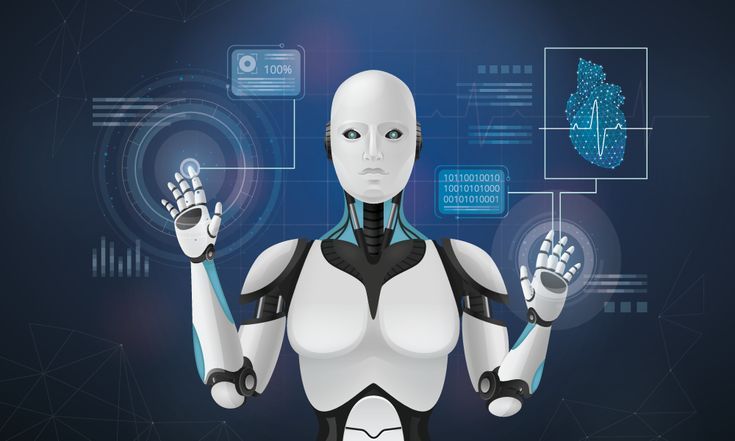
Certainly, let’s explore 6more case studies that highlight the remarkable impact of AI in healthcare:
Case Study 6: Ada Health’s Symptom Checker
Ada Health, an AI-driven symptom checker, offers patients personalized health assessments based on their reported symptoms. A case study in Berlin found that Ada’s AI accurately identified the correct condition in 89.3% of cases. This demonstrates how AI can empower patients to make more informed decisions about their health and potentially reduce unnecessary doctor visits.
Case Study 7: Butterfly Network’s Portable Ultrasound
Butterfly Network has developed a handheld, pocket-sized ultrasound device called the Butterfly iQ, which connects to a smartphone. It employs AI to provide real-time analysis of ultrasound images. In a case study, doctors in the emergency department used this device to detect critical conditions such as internal bleeding, effectively speeding up the diagnosis process and enabling rapid intervention.
Case Study 8: Viz.ai’s Stroke Detection
Viz.ai has created an AI-powered software that aids in the early detection of strokes, particularly in cases of large vessel occlusions. In a study involving the DAWN trial, Viz.ai’s system identified patients eligible for endovascular thrombectomy. The results showed that the AI system identified eligible patients up to 186 minutes faster than the standard assessment, saving valuable time and potentially reducing long-term disability.
Case Study 9: Owkin’s Collaborative AI for Clinical Trials
Owkin, a company specializing in federated learning, enables healthcare organizations to collaborate on AI research without sharing sensitive patient data. A notable case study involved the prediction of acute kidney injury (AKI) in collaboration with Mount Sinai Hospital. By pooling data and using AI models, the project improved AKI prediction accuracy and showcased the potential of collaborative AI research to advance medical understanding and outcomes.
Case Study 10: Cernostics’ AI-Enhanced Tissue Analysis
Cernostics employs AI to analyze tissue samples for gastrointestinal diseases, particularly in cancer risk assessment. In a clinical trial conducted at the University of Pittsburgh Medical Center, the AI-based technology demonstrated higher accuracy in diagnosing Barrett’s esophagus than traditional methods. This innovation streamlines the diagnostic process, potentially leading to earlier detection and better outcomes for patients.
These case studies collectively illustrate the diverse applications of AI in healthcare, from diagnosing diseases and predicting health conditions to enhancing medical imaging and collaborative research. As AI continues to evolve, it holds the promise of further advancing the field of medicine and ultimately improving patient care and o⅝utcomes. The integration of AI into healthcare is an exciting journey, with potential benefits for both medical professionals and patients alike
 kohsarblog
Leave a comment